

For three weeks, at a pulmonary rehabilitation centre in Timișoara, in western Romania, twenty-two adults with cystic fibrosis kept to the same daily programme: aerobic exercise, light weights, stretching, breathing exercises, and lessons in keeping their airways clear. Eleven of them had one thing added. Each afternoon they went to a quiet space in the clinic, and for twenty to twenty-five minutes a specialist talked them through their own bodies — head, shoulders, arms, chest, abdomen, legs — one group of muscles at a time, each deliberately tightened and then let go. The spoken instructions kept their attention on what the muscles felt like, and trained them in conscious breathing.
Cystic fibrosis is a genetic disease that mainly affects the respiratory and digestive systems, and research has tied it to insomnia, broken nights and poor-quality sleep, with night-time breathing symptoms, chronic inflammation and stress among the factors. The researchers behind the trial, published in 2025, wanted to know whether those afternoon sessions would change how their patients slept, and how they felt.
What the eleven were learning has a name, progressive muscle relaxation, and a history of more than a century. It goes back to a Chicago physician and physiologist who became convinced that the muscles take part in thinking itself.
A fire, and a question
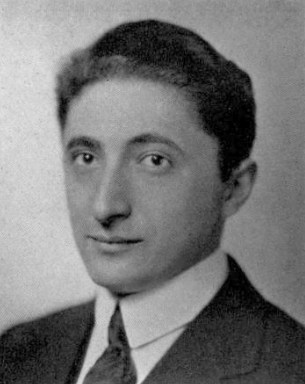
Edmund Jacobson dated his interest in nervous excitability to the age of ten, when a serious hotel fire broke out in Chicago. What stayed with him was not his own fright but the frightened behaviour of people in its aftermath, and his curiosity about how fear showed itself in others. He resolved that, once he was old enough for college, he would study everything known about nervous excitability and its treatment.
At Harvard, where he took his doctorate in 1910, he was frustrated to find almost nothing on the subject of nervous behaviour. By the time he moved on to a fellowship at Cornell, though, he had mastered a skill: introspection, a technique widely used in European psychology, in which a trained observer reports in close detail what goes on inside while perceiving, understanding and thinking. Psychology would later reject introspection as unreliable, as it turned towards the objectivity of the physical sciences. Jacobson built on it instead. A psychiatrist who visited him every month for three years in the 1960s, and published an account of his work in 1989, is plain about the lineage: progressive relaxation grew out of that self-observation, not out of relaxation.
Jacobson also trained as a physician, at Rush Medical School in Chicago, and did his research in the University of Chicago’s physiology department until 1937, when he left to open his own laboratory downtown. In 1915 he began using relaxation to treat patients with tension disorders.
The string that swung
What he could not do, for years, was measure the thing he was studying. In 1910 introspection was his only means of detecting very small muscular activity. A string galvanometer he tried in 1912 was not sensitive enough, and some colleagues were patronising about his hunt for voltages of a millionth of a volt or less; Jacobson recalled one who had exclaimed, “I take off my hat to one microvolt!”
In 1930 two engineers from Bell Telephone Laboratories helped him build an amplifier stable and sensitive enough to pick up the faint currents of muscles that were at rest yet still carried some tension. Getting it to work was an ordeal of its own. Motors in the laboratory, the lifts and even a thermostat relay all caused interference, so lamps were unplugged, galvanised iron plates went under the couch where the subject lay, and the experimenter kept as still as possible. Even then, if the subject had not relaxed well beforehand, a surge of current would break the galvanometer’s string before a single reading was taken.
In the first successful run, electrodes were fixed over a subject’s right biceps, and he was told only to imagine bending his arm. The string swung, unmistakably.
Studies he published in 1930 and 1931 measured the muscles while people imagined or recalled different activities, and gave shape to the idea at the centre of his work: that the muscles take part, in miniature, in thinking itself. When a patient imagines rowing a boat, he later explained, rhythmic patterns appear in the arms, shoulders, back and legs, though the movements are minuscule. Thinking in words and in pictures came with measurable activity in the muscles of speech and of the eyes, as though talking and looking were going on in miniature. “Tension is part and parcel of what we call the mind,” he put it.
In his view the traffic ran in both directions: calm the mind and the muscles can let go; release the body’s tension and anxiety falls. As early as 1927 he had noted that well-trained subjects, once thoroughly and deeply relaxed, all described a spell in which conscious thought dwindled or disappeared.
Another experiment turned on the knee. The knee-jerk reflex was then the standard yardstick of the state of the nervous system, and Jacobson observed that it was usually livelier during medical examinations — particularly when the patient had been told to relax. He tested people with extensive training in relaxation, once while they were distracted and again after they had been given time to relax deeply. Relaxed, their reflexes weakened; in those who seemed most deeply relaxed, the knee did not jerk at all. He concluded that a person trained in relaxation could reach, while fully awake, a lower level of muscle tone than in light sleep.
The 1989 account draws the practical consequence. Tension, it argues, is a form of behaviour, reflecting a state of mind primed for an action that never comes. The aim of treatment is deceptively simple: to give the patient the means to “stop doing it.” And the first step towards that was not relaxation at all.
An hour for a bent wrist
The account describes a typical first lesson. Lying in a quiet place, the pupil bent one hand back at the wrist and studied the sensation the movement produced — felt not in the hand but in the forearm. This first step, it stresses, was “not relaxation but observation.” Then the pupil stopped the movement and watched how the sensation changed. That was repeated just twice more, several minutes apart. The rest of the recommended hour was “spent lying quietly, essentially doing nothing” — though the doing nothing was a skill in itself: a light concentration, with attention resting mainly on the muscle being studied that session.
Later sessions took the same approach through the body region by region — limbs, trunk, neck, head — and every third session was a “zero period,” given over to relaxing alone, with no contraction at all. Once the whole body had been covered lying down, the sequence began again sitting up. The account compares the method to the graded method books used to learn a musical instrument, and says its apparent simplicity is earned the way a musician’s or an athlete’s is: through competent teaching and diligent practice. It is just as clear about what the method is not — “not a quick fix,” and not a matter of wiring a patient to a biofeedback machine and handing him tapes of soothing sounds.
The version most people learn
What most people are taught today is a descendant of that method rather than a copy. According to an evidence summary written for cancer clinicians, two later researchers developed a shortened, modified version of Jacobson’s procedure, and it is this form that is now used most often. It is taught by clinical psychologists, nurses, hypnotherapists, yoga instructors and others, in groups, one to one, or from a recording. Sessions commonly last twenty to thirty minutes, but they are not standardised, and vary in length, frequency and the number of muscle groups worked. The Timișoara protocol ran from the head downwards. A patient handout from the U.S. Department of Veterans Affairs, which describes itself as one method among several, starts with the hands.
In the handout’s version, the person finds somewhere they will not be bothered and settles into a comfortable position, lying down or sitting in a chair; it suggests taking out contact lenses first. The eyes close, or rest on a single point without strain, and a few slow, deep breaths come before anything else. Then comes the sequence, with the same two beats for every muscle group. On an in-breath, the muscle is tightened and held for about five seconds, while the person notes how the body feels and what thoughts are present. On the out-breath, it is released, and for about another five seconds attention stays with how body and mind feel now. Then the next group.
There are fourteen, in a fixed order, left and right together where they can be: the hands clenched into fists; the elbows bent to make a muscle of the biceps; the arms straightened to tighten the triceps behind them; the shoulders shrugged; the forehead wrinkled; the eyes shut as tightly as possible; the jaw clenched; the mouth pulled into the widest possible smile; the chin brought down to the chest and then, a breath later, the gaze lifted overhead; the back arched away from floor or chair; the stomach tightened, then the buttocks, then the thighs, enough that the legs may lift; and finally the toes pointed away from the head and then, on the next breath, back towards it.
The tension is never meant to hurt. Pain, cramping or discomfort is a signal to stop, and to squeeze less the next time. The breath is never held, and anyone who catches themselves holding it is advised to say “inhale” as they tighten and “exhale” as they let go. A wandering mind is treated as normal: attention simply comes back to the muscle group at hand. People with a history of muscle spasms, serious injury or chronic pain are advised to talk to their health care team before trying it at all.
A first run through all fourteen groups, the handout says, tends to take ten to fifteen minutes, and less with familiarity. It presents the routine as a way to reduce stress, and lists insomnia among the conditions it can help. What the practice is meant to build, in the handout’s cautious wording, is the ability to feel the difference between a tight muscle and a relaxed one, and a growing awareness of sensation throughout the body. Once the sequence is familiar it can shrink: fewer groups — just the arms, say, or just the jaw — or a single body part taken through several rounds, the squeeze lighter each time. For anyone who dislikes tightening the muscles, or finds that it hurts, the same handout describes a version without it: attention moves through the same fourteen groups, thinking of softening each one rather than tensing it, with several slow breaths before moving on.
Back in Timișoara
At the end of the three weeks, the two groups of patients showed no significant difference in their sleep scores. By the study’s 48-day follow-up, they did: those who had done the afternoon relaxation reported significantly better sleep than those who had not, and lower scores for depression. Their lung function, and their results on a six-minute walking test, were no different.
The authors are frank about the limits. With eleven patients in each group the trial is small, and they ask for its results to be read with caution; there was no long-term follow-up, so whether the improvement lasts is not known. The size, they explain, reflects how few patients there are to recruit: across the neighbouring counties of western Romania, only twenty-four adults with cystic fibrosis were under follow-up. The relaxation group had also started out with slightly worse sleep scores, which, the authors note, may have left more room for improvement.
Elsewhere the evidence is mixed. The summary for cancer clinicians judges the research on sleep and fatigue in its own field inconclusive, and describes the exact mechanism by which the method works as unclear.
What reached the clinic
Jacobson went on working throughout his long life, eventually adding a computer to his apparatus to pin down the timing between mental events and muscular ones; his last book, The Human Mind, came out in 1983, the year he died. The 1989 account of his method ended on a note of caution rather than triumph: much work remained, it said, before his observations would meet the standard of proof that medicine accepts.
What reached a quiet space in a Romanian clinic, more than a century after he first used relaxation with patients, was a shortened version of his method — twenty-odd minutes instead of an hour for a single movement, the main muscle groups in a single afternoon instead of region by region over many sessions. What survived is the part he put first. Before anything is relaxed, it is noticed.