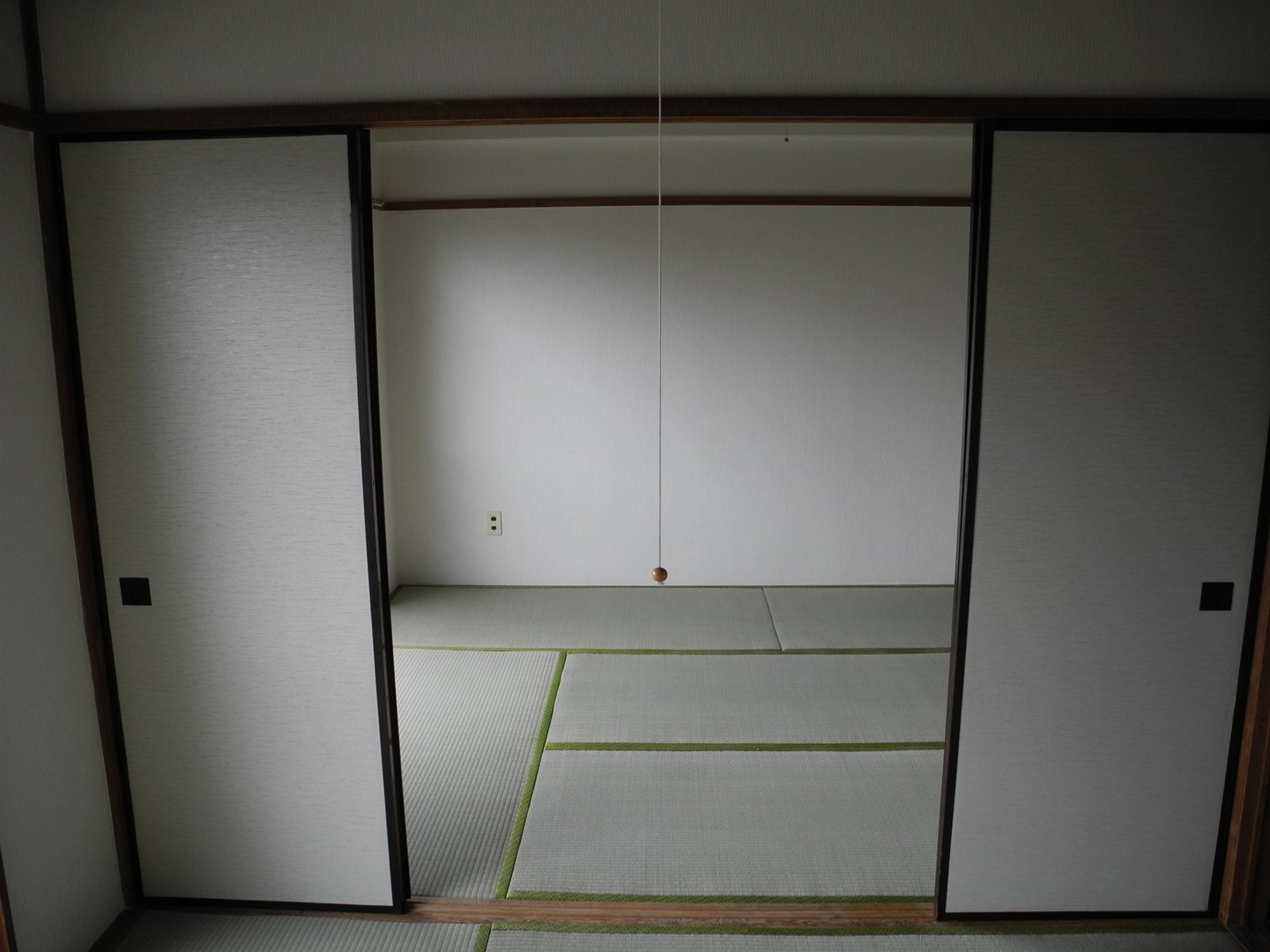
For a week, a person sits alone in the corner of a room, walled off from the rest of it by a folding screen. Meals are set down in front of the screen and cleared away again afterwards. There is no newspaper, no radio, no conversation. Every hour or two, a guide comes to the screen and asks a single question: what have you been reflecting on? The person answers in a few sentences — rarely more than five minutes’ worth — and is left alone to continue. For the rest of the time in between, there is only one task: to think, in order, about one person at a time, and to ask of that person three fixed questions. What did I receive from them? What did I give back? What trouble did I cause them?
This is Naikan — literally “looking inside,” though Gregg Krech, who directs the ToDo Institute in Vermont, offers a looser and more evocative rendering: “seeing oneself with the mind’s eye.” It was developed in Japan in the 1940s by Ishin Yoshimoto, a devout follower of Jōdo Shinshū, the True Pure Land school of Buddhism, out of a much harsher ascetic practice he had put himself through as a young man. Today it is taught in a shortened daily form as well as the week-long retreat, and in Japan it has been used in the treatment of addiction and in the rehabilitation of prisoners.
Three questions, one person at a time
The three questions are the whole method. A practitioner does not reflect on a person in general or in the abstract — “my mother,” considered all at once — but works methodically through a relationship a few years at a time, in chronological order. A retreat usually opens with the practitioner’s mother: first the years from earliest memory to about six, then six to ten, then ten to fourteen, and so on up to the present, before moving on to the father and then to others. For each stretch, the same three questions are asked in the same order: what did I receive from this person during this period, what did I give in return, and what trouble, worry, or difficulty did I cause them. Yoshimoto’s own instruction, as Krech relays it, weighted the three unevenly: a practitioner is asked to spend a clear majority of the time on the third question, the trouble caused, rather than dwelling on what was received or given.
The question of what was received tends to surface small, specific, previously unremarkable things. Krech’s own examples come from a single morning: the orange juice his wife squeezed for him, the breakfast dishes she washed, the watch on his wrist that she had given him. Her reasons for doing those things, he notes, are beside the point: he benefited either way. The exercise is not to summon a general feeling of gratitude but to reconstruct each concrete instance, and the bookkeeping flavor is deliberate. Yoshimoto was a businessman, Krech writes, who each month sent statements to his customers and received them from his suppliers, and he thought a human life deserved the same kind of reconciliation. With a whole week to fill, a retreatant may go as far as working out how much money their parents spent on them across their first eighteen years. The same concreteness applies to what was given back, and to the trouble caused.
A week behind the byōbu
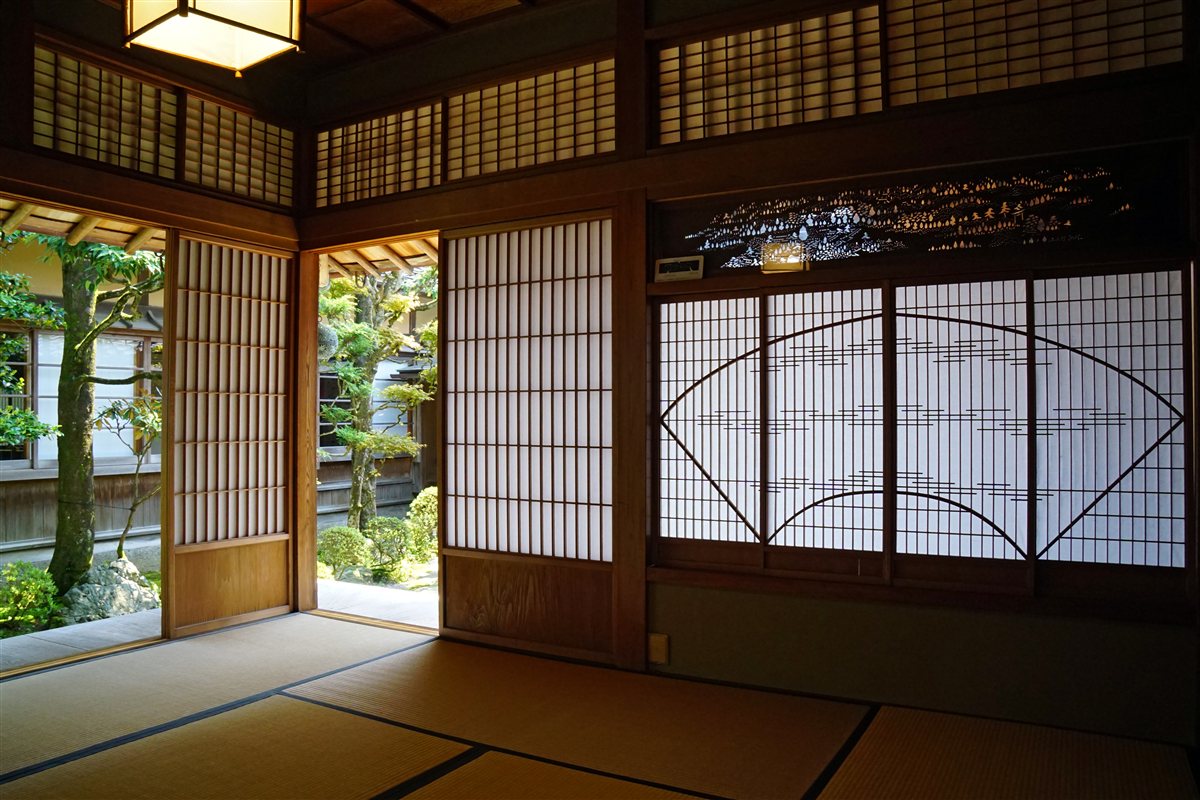
The week-long retreat has been set out in detail by Teruaki Maeshiro, a clinical Naikan therapist who spent more than two decades doing that work in a hospital before becoming the third director of the Nara institute where Yoshimoto himself once guided people through the method. It keeps a strict timetable: wake at five in the morning, lights out at nine at night, with the intervening hours spent almost entirely behind a folding screen — a byōbu — set up in the corner of a quiet room. The screen is not decorative; it is there to shut out the outside world and every kind of distraction. Inside it the practitioner may sit however is comfortable, but sits up straight for each interview. Leaving the enclosure is permitted only for the toilet or a bath; at night the screen is taken away and a futon is spread out in the same corner. Reading, television, radio, telephone calls and conversation are all off-limits, as is alcohol, though smoking is allowed in a separate area. A guide delivers meals to the screen three times a day and prepares a bath, but otherwise the practitioner’s only human contact is the short interview that punctuates the day roughly eight or nine times, at intervals of one to two hours, lasting a few minutes each. As one European teacher describes the role, the guide offers no verdict, criticism or praise — only close attention, a word of thanks, and the next person or stretch of years to examine.
What such a retreat can bring to the surface is the subject of the case Maeshiro uses to illustrate the method. On the sixth day of an eight-day course in hospital, a woman turned her reflection, of her own accord, to her husband’s first wife. She saw that she had only been able to marry because that woman agreed to a divorce, that she had never once given it a thought, and that she had simply taken the child-support payments to be enough. “I caused them a lot of trouble,” she concluded, as Maeshiro records it, and then sobbed for a while. Soon after the course ended, by his account, she asked her husband to take her to his mother, with whom she had long been at odds, and apologized.
From an ascetic ordeal to a teachable method
The week behind the screen is itself a softened version of something much harsher. Yoshimoto, born in 1916 in Yamatokoriyama, in Nara Prefecture, the son of a fertilizer distributor, grew up devout: after the death of his younger sister his mother turned to Buddhism, and he went with her on her visits to temples. As a young man he fell in love with Kinuko, the woman he would later marry, who — in Maeshiro’s telling — had already attained enlightenment by the time they met. Wanting to reach the same state and be worthy of her, and against his father’s wishes, he took up mishirabe, the older and far more punishing practice Naikan grew out of, kept by Jōdo Shinshū followers in the countryside around Nara: complete fasting, even from liquids, combined with long stretches without sleep, all directed at examining one’s own thoughts and conduct. He failed three times before succeeding on a fourth attempt, and is said to have reached enlightenment at around eight in the evening on 12 November 1937. What he had discovered, in one later account, was the full extent of his dependence — on other people, on all living things, and ultimately on nature.
Over the following years Yoshimoto pared mishirabe down, stripping out its physical ordeals while keeping its introspective core, so that anyone, not only devout Buddhists, could practice it, and by 1941 he was calling the result Naikan. In 1953 he opened his own Naikan center in Nara. From 1965 the method began to draw attention as a psychological treatment rather than an ascetic path to enlightenment, and it was not until 1968 that the three questions were fixed into the exact form still used today.
Japanese prisons had taken it up earlier still: a 1968 study from a Japanese prison, published in the Japanese Journal of Criminal Psychology, notes that correctional institutions had adopted it about a decade before. The study compared inmates’ attitudes toward themselves before and after a course of Naikan with those of inmates who had no such course, and found that the Naikan group’s self-attitudes had shifted significantly while the other group’s had barely moved. The change was not uniform, though: some inmates changed not only in how they saw themselves but in how they behaved inside the institution, while others hardly changed at all.
Yoshimoto spent many years guiding people through the method at his Nara institute. He died in 1988, at the age of seventy-three.
A practice that traveled
Naikan has since spread from Japan’s religious circles and prisons into hospitals and psychiatric clinics, and well beyond Japan. The first Naikan seminar in Austria was held in 1980, and in 1993 the method was clinically accepted at the Shanghai Mental Health Center in China. Krech’s ToDo Institute has run Naikan programs and retreats in Vermont since 1989. Writing in 2015, Krech counted about thirty Naikan centers in Japan and a dozen more across Austria, Germany and Switzerland. Its uses now extend to the treatment of addiction, eating disorders and depression, alongside its older role in criminal rehabilitation and its origins as a Buddhist discipline.
One week, then every day
A full week behind a screen is demanding, and the method also exists in a far shorter form. Krech teaches a daily version that fills twenty to thirty minutes at bedtime: roughly ten minutes given to each of the three questions, applied to the past twenty-four hours rather than to an entire lifetime. A Buddhist chaplaincy course in Japan describes another pattern, half an hour each morning and evening. Either way, the retreat is meant as training for daily life rather than an end in itself. “One-week Naikan is the beginning, daily Naikan is the aim,” in words one European teacher attributes to Yoshimoto himself.
Krech ends his own instructions with the reason for all the list-making. What we know of our own lives, he writes, is “only an edited version, colored by our emotions and narrow vision.” The three questions, in his telling, are a way of getting closer to the original draft.