A student on the tenth day of a Goenka-tradition Vipassana course sits with eyes closed, moving attention systematically through the body, region by region. The instruction is not to breathe in any special way, nor to picture anything, nor to repeat a word. It is simply to notice whatever physical sensation is already present — heat, pressure, tingling, or nothing detectable at all — and to do so without pulling toward the pleasant ones or pushing away the unpleasant. Nine days earlier, the same student was doing something narrower: sitting still and watching the breath move in and out at the nostrils, without changing it. The shift between those two exercises, and the reasoning behind it, is the core of what S.N. Goenka taught for more than four decades and what the dhamma.org network of centers now teaches in his name in 110 countries.
Two stages: Anapana, then Vipassana proper
Every course in the Goenka tradition opens with a technique called Anapana — attention fixed on the natural, unaltered flow of the breath as it enters and leaves the nostrils. Nothing is added to the breath and nothing is visualized; the tradition treats the exercise as a way of developing concentration and control over the mind rather than as the main practice, and the Vipassana Research Institute puts its span at the first three and a half days of a ten-day course. By the fourth day, dhamma.org says, the mind is calmer and better able to take up Vipassana itself: the systematic scanning of bodily sensation described above, moving attention methodically across the body rather than resting it on one point.
Central to the technique, as dhamma.org describes it, is the pairing of sensation with equanimity: the student attends to what the body is doing, grasps how changeable it is, and trains out the reflex to react. In the tradition’s account, the sensations are not themselves the problem — craving, aversion and ignorance are what it holds responsible for suffering. Repeated, disciplined non-reaction to sensation is presented as the mechanism of change, rather than relaxation, visualization, or any devotional element. Dhamma.org describes the result as a life characterized by “increased awareness, non-delusion, self-control and peace,” reached through mental training rather than belief.
A different technique from the one sharing its name
Vipassana is not a single standardized method, and the Goenka tradition is one of several twentieth-century systems that revived it — each shaped by a different Burmese teaching lineage. This site has separately covered the Mahasi Sayadaw method, developed in Burma around the same period, which trains attention through continuous silent “noting” of experience — labeling each rising thought, sound, or movement, anchored to the rise and fall of the abdomen with each breath. The Goenka method does not use verbal noting at all; its anchor is a scan of sensation across the body, and its emphasis on equanimity toward those sensations, rather than on labeling mental events as they occur, is what its own teaching materials treat as central to the practice. The two share a Burmese revival-era origin and the English word “vipassana.” They differ in what the student is instructed to do with attention, and in nothing that makes either the more authoritative version of the word.
From Mandalay to Mumbai
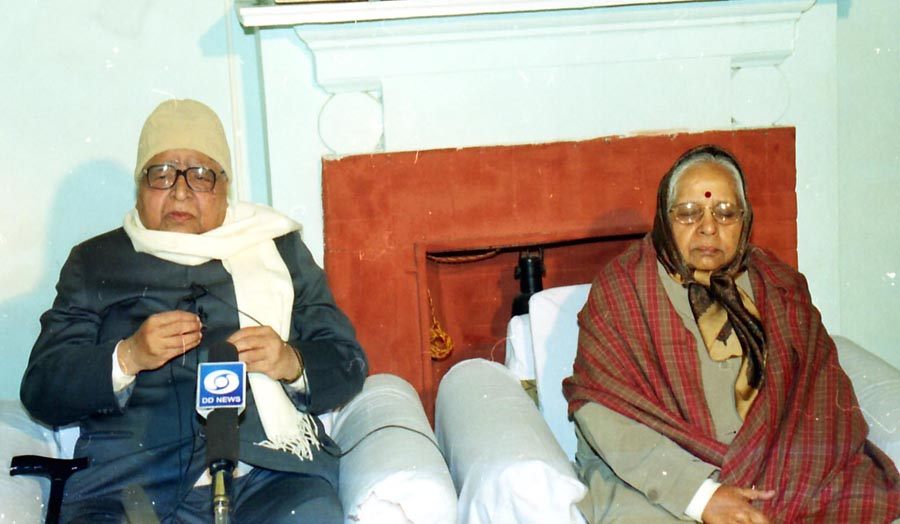
S.N. Goenka was born Satyanarayan Goenka on 30 January 1924 in Mandalay, Burma, into a family of Indian descent. After the Second World War he returned to Rangoon and built a substantial business career there, helping found the Rangoon Chamber of Commerce and Industries and serving as its president. Neither the wealth nor the standing brought him peace, by the account the Vipassana Research Institute gives and Goenka himself often repeated: mental tension set off migraines severe enough that morphine was the only thing that touched them, and doctors he consulted in Japan, Europe and America could not help. A friend suggested the International Meditation Centre in northern Rangoon, opened a few years earlier by Sayagyi U Ba Khin — a top-level civil servant in the Burmese government who taught Vipassana as a layman rather than as an ordained monk. U Ba Khin refused him at first. Told that his visitor wanted relief from migraines, he answered: “You are devaluing the technique if you come to cure a physical disease.” Goenka hesitated for some months and sat his first ten-day course in 1955.
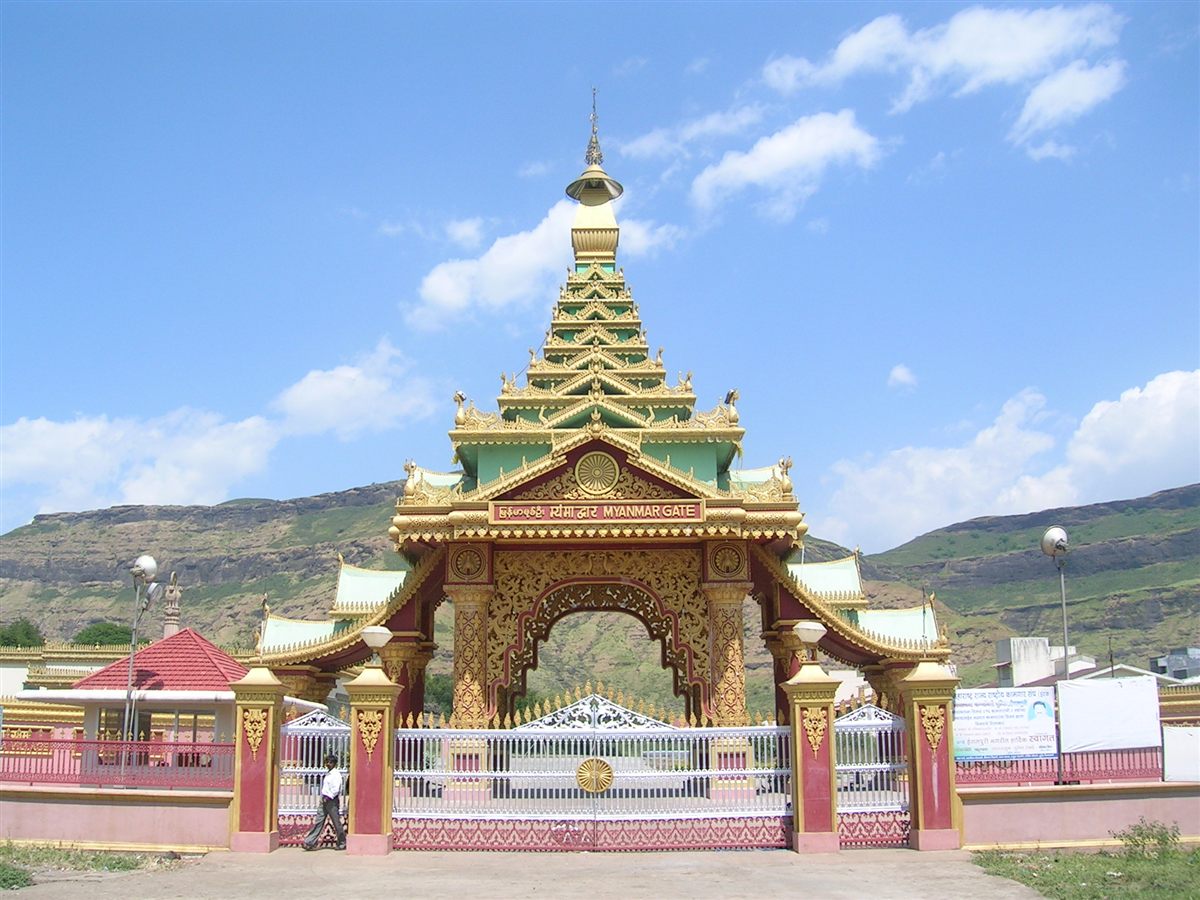
Goenka went on meditating under U Ba Khin for fourteen years. His teacher wanted the technique returned to India, which he regarded as its place of origin and where, in the tradition’s own account, it had been lost while Burma preserved it from teacher to pupil. The Burmese government of the 1960s did not normally let its nationals travel abroad, but Goenka was of Indian descent, and when his mother — who had already left for India with his father — fell ill, the authorities were willing to issue him a passport valid for travel there. Before he left, U Ba Khin formally appointed him a teacher of Vipassana, in June 1969, and had him take two courses for the Indian community inside Burma with his teacher sitting beside him, the first on a Mandalay rooftop between two cinemas. He flew to India that June. His first ten-day course in India ran in Mumbai from 3 to 13 July 1969; among the students were his parents, a few others, and a woman from France.
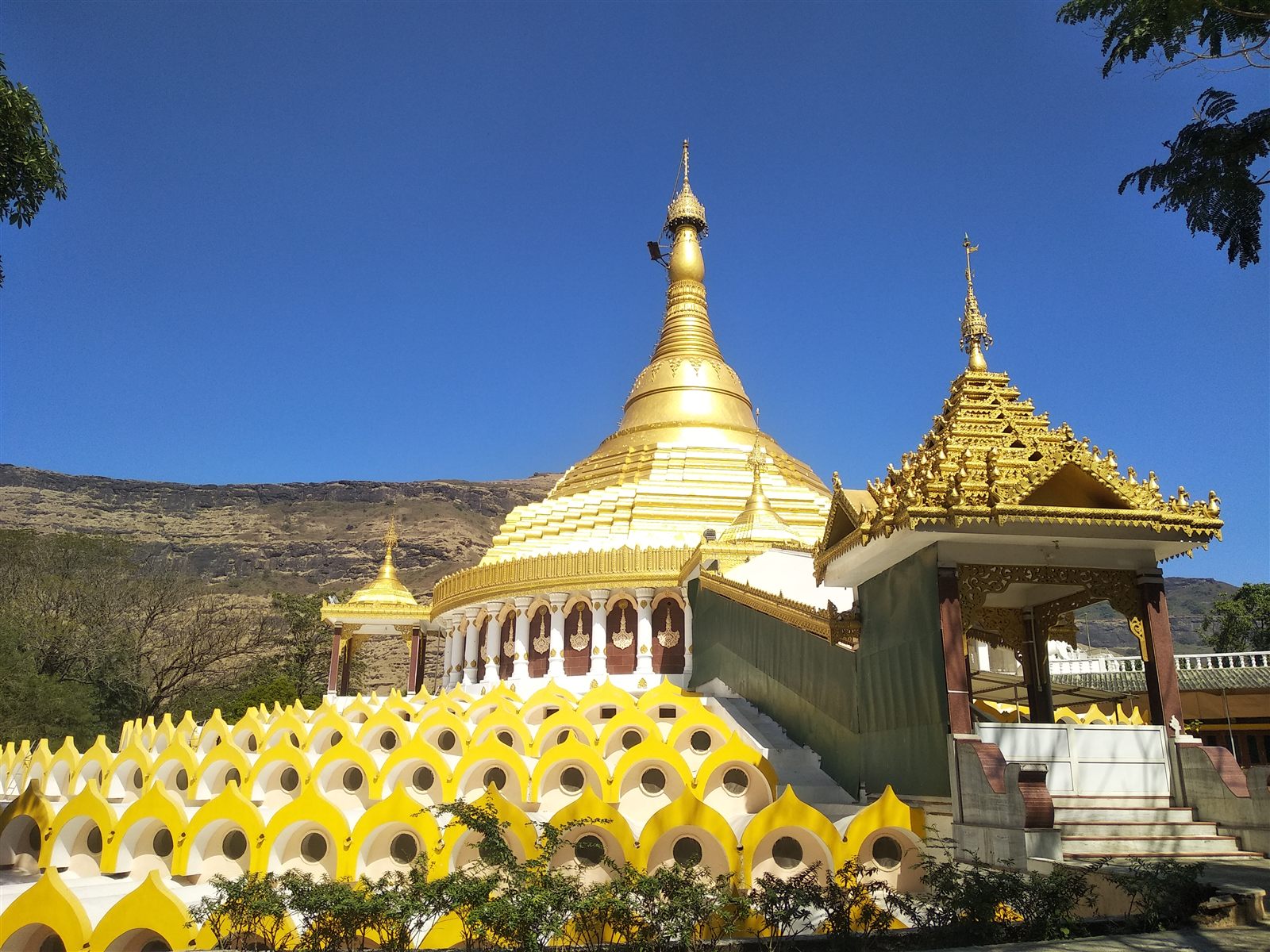
Demand grew steadily through the 1970s. The first Vipassana course inside an Indian prison was held at Jaipur Central Jail in October 1975, pressed for by Rajasthan’s then Home Secretary, Ram Singh, and attended by 114 inmates; a second followed at the same jail in 1976, with 143. (The organization is not internally consistent on the date: its centenary biography of Goenka puts the first Jaipur prison course in 1974, while its prison timeline and its prison-courses page both give 1975 and supply the attendance figures.) Dhamma Giri, the network’s first permanent center, officially opened at Igatpuri, Maharashtra, in October 1976. The Vipassana Research Institute, its research and publishing arm, was established at Igatpuri in 1986 and went on to publish the Pali Tipitaka and its commentarial literature in 140 volumes across Devanagari, Burmese and Roman scripts, distributed free to scholars, alongside a digital edition of the canonical texts. Goenka taught his first courses in the West in 1979 — two in France, one in Canada, two in the United Kingdom — and traveled abroad yearly for the next two decades. From late 1981 he began training assistant teachers to conduct courses in his place using recordings of his instructions — the arrangement under which courses are conducted today, by unpaid assistant teachers, funded entirely by past students’ donations, with no fee charged to attend.
Goenka died in Mumbai on 29 September 2013, at the age of 89. Writing around the centenary of his birth in 2024, the Vipassana Research Institute counted 270 permanent centers and more than 140 non-center residential sites in 110 countries, staffed by over 2,000 assistant teachers, and more than 3,200 courses held annually for roughly 200,000 people.
The ten-day course
The standard entry point to the technique is a residential ten-day course, run to the single timetable dhamma.org publishes for it. The wake-up bell is at 4:00 a.m.; the day is broken into meditation blocks, a breakfast break, a lunch break, an afternoon tea break, and a recorded evening discourse from Goenka between 7:00 and 8:15 p.m.; lights go out at 9:30. Students keep what the network calls Noble Silence — silence of body, speech and mind, with no gestures, sign language or written notes passed between students — from the beginning of the course until the morning of the last full day, though they may speak with the teacher and with course management throughout. Men and women are completely separated for the duration, including couples and members of the same family.
The technique itself follows the Anapana-then-Vipassana progression described above: three and a half days on breath awareness, then six and a half on the practice of Vipassana, and on the last full day metta-bhavana, or loving-kindness, in which whatever has been cultivated over the ten days is turned outward and shared with all beings. Speaking resumes that day; the course ends on the morning of the eleventh. Everyone attending must keep five precepts for the duration — abstaining from killing any being, stealing, all sexual activity, telling lies, and all intoxicants — and old students returning for a further course keep three more, among them not eating after midday. All prayer, worship, religious ceremony and other meditation techniques are suspended for the ten days, and dhamma.org is explicit about why: not to condemn any other practice, but, in its words, “to give a fair trial to the technique of Vipassana in its purity.”
There is no charge for a course, not even to cover food and accommodation. Donations are accepted only from people who have already completed at least one ten-day course in the tradition, which means a first-time student can give something at the end of their own course but not before it; those donations are the only source of funding for courses anywhere in the network, and neither the teachers nor the organizers are paid for their service. Dhamma.org’s own summary of the arrangement is that the technique “is not taught commercially, but instead is offered freely.”
The Satipatthana course
For students who have sat at least three ten-day courses with Goenka or one of his assistant teachers — courses served as a volunteer do not count — and who have been practicing the technique for at least a year, the network offers a Satipatthana Sutta course. It keeps the same timetable and the same discipline as a ten-day course. The single difference is in the taped evening discourses, which work carefully through the Satipatthana Sutta, described by dhamma.org as the principal text in which the technique of Vipassana is systematically explained. Applicants must also not have practiced any other meditation technique since their last ten-day course, and must be keeping the five precepts in daily life — the third, on sexual misconduct, and the fifth, on intoxicants, strictly from the time they apply.
Twenty, thirty, forty-five, and sixty-day courses
Beyond the Satipatthana course, the network runs progressively longer residential courses, each gated behind a longer record of practice than the last. The twenty-day course is open to old students who have completed at least five ten-day courses and one Satipatthana course, have served on at least one ten-day course, and have been practicing regularly for at least two years; the long-course requirements published by Dhamma Padhana add a two-hour daily sitting, a six-month gap since the student’s last long course, and a spouse supportive of their sitting it. The thirty-day course requires at least six ten-day courses — one of them sat after the student’s first twenty-day course — plus a completed twenty-day course and a Satipatthana course. The forty-five-day course is open only to assistant teachers and those involved in Dhamma service, and asks for at least seven ten-day courses, one sat after the student’s first thirty-day course, two completed thirty-day courses, and at least three years of practicing this technique. The sixty-day course sits at the top of the structure and is reserved for people who have already sat two forty-five-day courses: active assistant teachers, those entering assistant-teacher training, and — as rare exceptions, case by case — old students deeply involved in daily Dhamma service. The organization notes that these requirements are minimums rather than a guarantee of admission, and that they may change from year to year. The Vipassana Research Institute describes the longer courses simply as being organized for serious and committed meditators; they teach the same technique rather than a further one.
What the research says — and what it doesn’t
Two distinct bodies of evidence exist on the Goenka method, and they carry different weight for different reasons. The first comes from the Vipassana Research Institute itself, which has published findings from courses run inside Indian prisons, most prominently at Delhi’s Tihar Jail from 1994. Two studies there — 120 inmates in January 1994, then 150 in April, assessed by a five-person team of psychologists, psychiatrists and social workers — reported significant drops in hostility and in feelings of helplessness immediately after a course, improved anxiety and depression scores among the roughly one in five inmates found to have a psychiatric disorder, and higher well-being among those without one. The same report records what did not last: well-being and the reduction in helplessness held at three and six months, but the gains in hopefulness and the drop in hostility were not sustained at follow-up, which its authors attribute to conditions inside the prison working against continued practice. They also note that randomization in sample selection “was not fully satisfactory” and that long-term follow-up inside the jail proved impossible because inmates kept being released. Because this work originates with the organization whose technique is being studied, it is best read as an account of what the network observes in its own courses rather than as independent confirmation.
Independent academic research exists as well, much of it in prison and correctional settings rather than among general wellness populations. A 2006 paper by Sarah Bowen and colleagues at the University of Washington’s Addictive Behaviors Research Center evaluated a Vipassana course in a jail and found that, after release, participants showed significant reductions in alcohol, marijuana and crack cocaine use compared with a treatment-as-usual control condition, along with fewer alcohol-related problems, fewer psychiatric symptoms and gains on positive psychosocial measures. A 2012 longitudinal study led by Abigayl Perelman and Sarah Miller followed three retreat cohorts totaling 60 long-term offenders at a maximum-security prison in the American South against an alternative-treatment comparison group of 67, over one year. The Vipassana participants reached higher levels of mindfulness and emotional intelligence and had less mood disturbance than the comparison group — but both groups’ rates of behavioral infractions fell by the one-year mark, which leaves the behavioral result unable to distinguish the course from whatever the comparison group received. The authors concluded that further study of the technique across diverse offender groups is warranted.
A 2025 systematic review in Cureus pooled eleven studies and 792 participants and concluded that moderate evidence supports the technique’s psychological and physiological benefits, particularly for stress, anxiety and migraine burden, with effect sizes it characterized as ranging from moderate to small. Only three of the eleven studies reported any follow-up at all, at six to twelve months, and the review notes that some gains diminished by then and that complete retention of benefits was among its null findings. It is equally explicit about the evidence base’s limits: a median study size of 40 participants, no randomization in eight of the eleven studies and no blinding in ten of eleven, high risk of bias in all three of the randomized trials, reliance on self-report in six, likely under-reporting of negative results, and an English-language search that may have excluded relevant non-English studies. Its own conclusion is that larger randomized trials with objective measures are needed to confirm the technique’s efficacy — a caution that reads as a description of where the research stands rather than a verdict on the practice.