Twenty-three healthy adults — sixteen men and seven women, mean age thirty-four — sat in laboratories in Florence and Pavia, wired to instruments recording their electrocardiogram, their respiration, their blood pressure continuously at the wrist, and, by transcranial Doppler ultrasonography, the velocity of blood flowing through the middle cerebral artery. Across five conditions they breathed however they liked, talked freely, breathed to the beat of an electronic metronome, recited the Roman Catholic rosary, and recited a yoga mantra. The paper built around those recitations appeared in the BMJ of 22 December 2001. Its interest lies not in one form of recitation outperforming the other, but in how closely the two converged once measured against the same instruments.
What the rosary recitation actually required
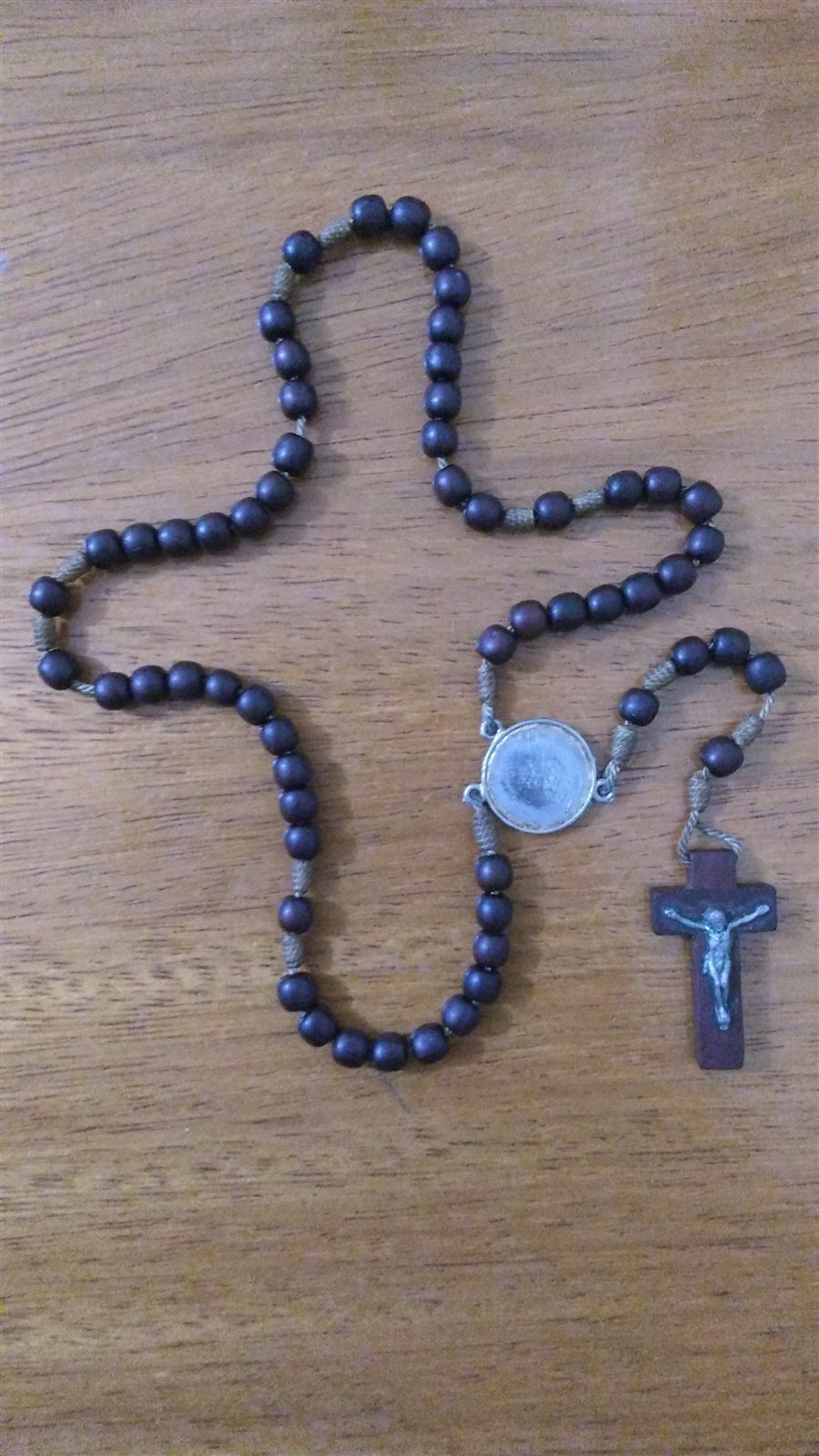
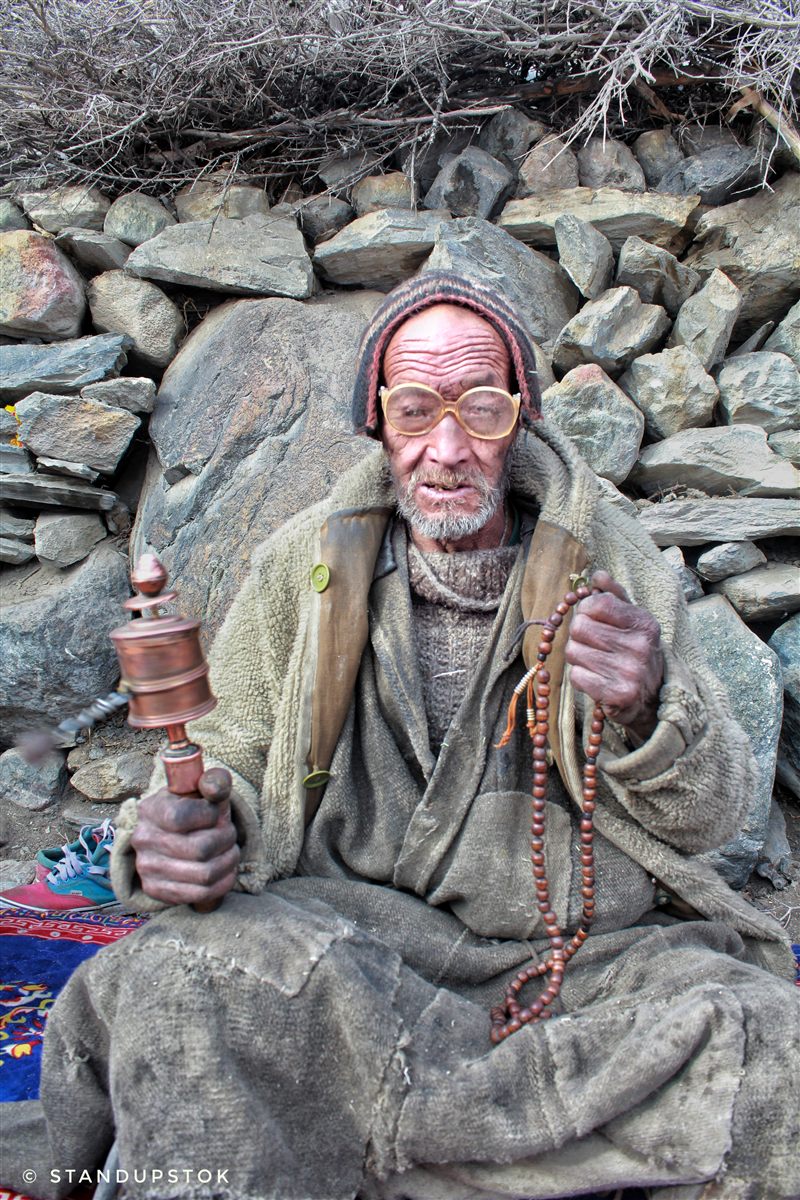
The rosary itself is a string of beads, usually ending in a crucifix, that a person holds and moves through their fingers one bead at a time to keep count while praying — each bead marking one repetition of a fixed prayer, most commonly the Ave Maria. The rosary condition was not performed alone. The researchers worked their volunteers in pairs, one voicing the priest’s part of the Ave Maria in Latin and the other answering with the response, back and forth through repeated cycles. The recitation was unrehearsed and the pace was left to the pair: the paper records no instruction about how long either half should take. The result surprised the researchers: one full cycle of the prayer, including the break at its end, ran to almost exactly ten seconds. Ten seconds per cycle is six repetitions a minute — a figure nobody had asked the pairs to hit, and one that emerged from nothing more than the pace at which the pairs took the prayer in alternation.
What the mantra recitation actually required
The yoga mantra used was om-mani-padme-om, recited aloud. None of the twenty-three volunteers had any previous experience of yoga; in the days before the study they were briefly taught how to say the mantra by a yoga teacher who, the paper notes, was not told what the study was trying to find out. The instruction was short but specific. The voice carrying the mantra should be “alive” and resonant. The reciter was to listen to the sound being produced and let it flow freely rather than force it. When the syllables ended, the out-breath was to finish comfortably rather than be cut short, and a pause before the next cycle was permitted if a rest was wanted. Nothing was said about timing, and nothing about pitch. Recited that way, the mantra slowed breathing to 5.7 a minute — the rosary’s pace within a tenth of a breath, and, like the rosary’s, arrived at without any target having been set.
The measurements, and what changed
Breathing rate was the plainest number in the results. Spontaneous, unguided breathing averaged 14.1 breaths a minute across the group. Ordinary talking, used as a comparison condition, brought that down to 7.6. The Ave Maria recitation slowed it further, to 5.6 breaths a minute; the mantra brought it to 5.7 — both close enough to the pace set by the recitations themselves that the paper’s own summary states the two practices slowed respiration to “almost exactly 6/min.” A fifth condition, breathing paced by an electronic metronome and a visual signal with no recitation at all, held the rate at 6.0 and was always performed last in the sequence; the other four conditions were recorded in random order.
Baroreflex sensitivity — a measure of how responsively the autonomic nervous system adjusts heart rate in response to swings in blood pressure, generally read as a marker of healthy cardiovascular regulation — rose alongside the slower breathing. The paper reports three separate increases, each against its own baseline and each statistically significant. Against the free-talking figure of 9.5 ms/mmHg, the Ave Maria recitation raised baroreflex sensitivity to 11.5 and the mantra to 12.3. Against spontaneous breathing, where it stood at 10.5, the metronome-paced condition raised it to 13.2. Recited six times a minute, the paper reports, both prayer and mantra caused “striking, powerful, and synchronous increases” in the body’s existing cardiovascular rhythms.
Reading the conclusion the paper actually draws
It would be easy to read a study like this as a verdict on which practice “works better” — the numbers invite exactly that kind of scanning. The paper does not rank them. Its stated conclusion is about the shared mechanism: any rhythm formula that brings breathing down to six breaths a minute, the authors write, will “induce favourable psychological and possibly physiological effects.” Prayer and mantra are folded into that single category and evaluated by the same respiratory and cardiovascular measurements throughout.
Where the paper does single one out, it is the rosary, and on practical rather than spiritual grounds: the study’s own summary of what it adds suggests the rosary might be viewed as “a health practice as well as a religious practice.” The authors also offer a historical account, presented as belief rather than finding. They write that the rosary may have partly evolved because it synchronised with the body’s inherent cardiovascular rhythms and so produced a feeling of wellbeing, and that yoga mantras “may have evolved as a simple device” for slowing respiration, sharpening concentration and inducing calm. They further state that the rosary reached Europe with the crusaders, who took it from the Arabs, who took it in turn from Tibetan monks and Indian yoga masters — a historical claim stated in passing in the discussion, and one that nothing in the study’s design, a single laboratory session, was built to test.
Why six breaths a minute matters physiologically
The number six is not arbitrary. More than a century ago, the paper recounts, Mayer described a ten-second cycle in blood pressure — six per minute — related to both vagal and sympathetic activity. A respiratory rate of around six a minute coincides with those Mayer waves and, the authors argue, augments them, increasing the power of vagal respiratory sinus arrhythmia. Breath and blood pressure, in other words, stop working across each other and begin rising and falling together. Both recitations landed near that frequency without anyone aiming for it.
What the study cannot separate is pace from words. It compared no other breathing rate against the rosary and mantra conditions, so the design does not isolate the effect of the six-per-minute rhythm from the effect of reciting a text at all. The wordless metronome condition, held at the same rate, produced the highest baroreflex sensitivity of the five conditions measured, but the reported statistics compare each condition to a resting or talking baseline rather than to one another, and the gap between the metronome figure and the mantra figure — 13.2 against 12.3 ms/mmHg — is small beside the spread within each group.
What the study does not show
The sample was small: twenty-three adults, sixteen men and seven women, all healthy volunteers rather than a clinical population, studied in two laboratories in Florence and Pavia. None had previous experience of yoga. The paper records nothing about the participants’ religious backgrounds, or about how familiar any of them were with saying the rosary — a variable that goes unmeasured on the Catholic side while its counterpart on the yoga side is stated plainly.
The recordings were single laboratory sessions rather than a sustained practice, so the results describe an immediate physiological response to a few minutes of paced recitation, not the cumulative effect of years of praying the rosary or reciting a mantra as an ongoing discipline. And both traditions were tested in stripped-down form: one cycle of the Ave Maria repeated in alternation, one mantra repeated on its own, each lifted out of the ritual and teaching context that ordinarily surrounds it. What the study measured, then, is what these particular recitation patterns do to breathing and heart rhythm under laboratory conditions — not what either practice means, or does, inside the tradition it comes from.