
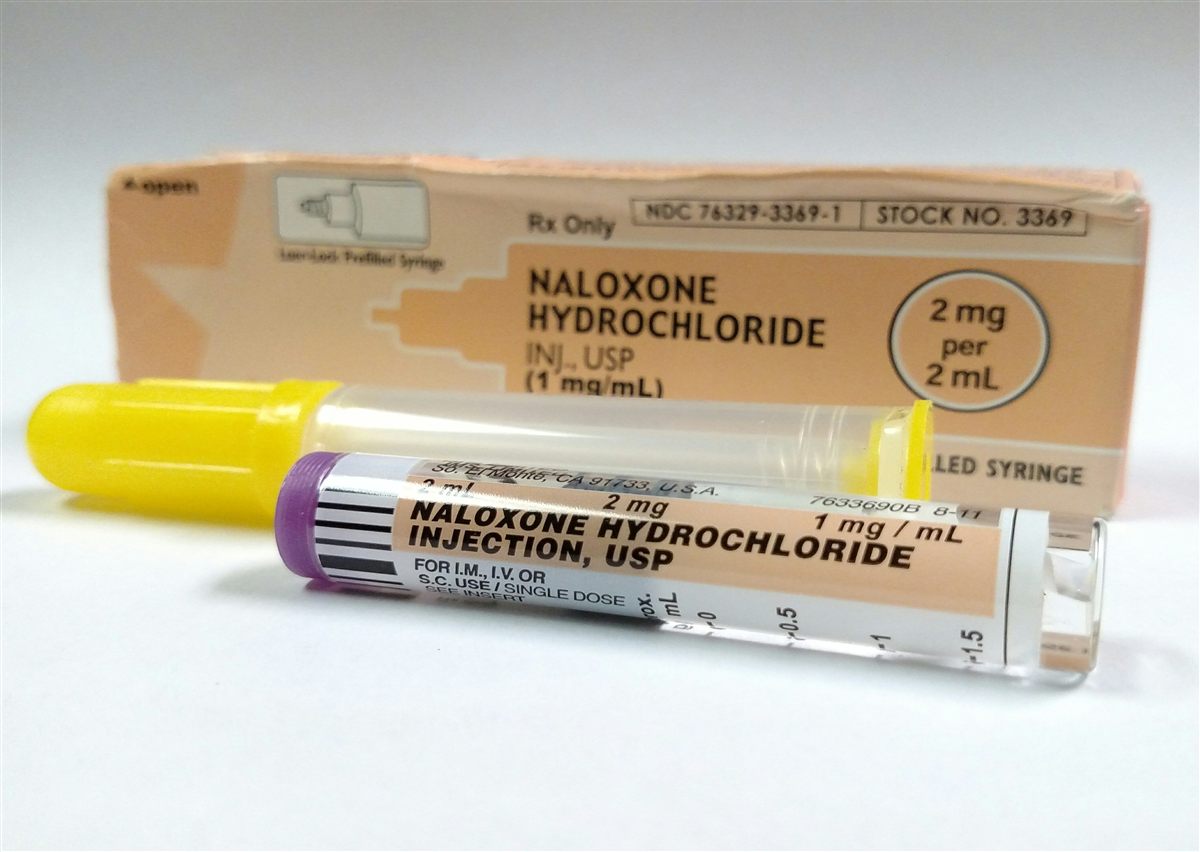
In a lab at Wake Forest School of Medicine, volunteers lay with a thermal probe pressed against the back of the right calf, an intravenous line in one arm, and four days of meditation instruction behind them — instruction that had, at most, taken up eighty minutes of their lives. Before the heat was switched on, that same IV line delivered one of two things: naloxone, a drug that blocks the brain’s opioid receptors, or plain saline. Neither the volunteers nor the researchers recording their pain ratings knew which. The question the trial was built to answer was narrow and mechanical: when brief meditation training dulls pain, is it leaning on the same opioid system the brain uses to produce a placebo effect — or something else entirely.
Four days, twenty minutes
The volunteers in this study, published in the Journal of Neuroscience in 2016 by a Wake Forest team, were described by the researchers as meditation-naive. Those assigned to the meditation group received four separate days of training, twenty minutes per session. On the first day, instruction focused narrowly on the sensation of breath at the tip of the nose, held with what the researchers describe as non-evaluative awareness — noticing the sensation without judging or elaborating on it. The second day widened that focus to the whole breath cycle and to bodily sensation more broadly. By the third and fourth days, guidance was minimal: the paper describes the guided instructions as progressively reduced across the training days so that subjects meditated in silence, sustaining the same breath-focused attention largely on their own. A separate control group spent the same four twenty-minute sessions listening to an audio recording of The Natural History of Selborne, with no meditation instruction at all; they were not permitted to sleep, use their phones, or talk to the experimenter.
This is the detail worth sitting with before anything else: nothing about this training resembled a lifelong contemplative discipline, a retreat, or even a habitual daily practice. It was a short, structured skill introduced over four sessions, aimed at a single instructed act — sustained, non-judgmental attention to the breath.
Heat, a number, and a needle
Pain was induced with a thermal probe (a Medoc TSA-II device, 16 mm² contact surface) delivering ten alternating twelve-second plateaus of skin-surface heat at 49°C and a neutral 35°C to the back of the right calf; the ventral surface of the left forearm was the site used during training sessions. Participants rated the intensity and the unpleasantness of the heat before and during each condition. Seventy-eight volunteers, mean age twenty-seven, completed all study procedures out of ninety-five recruited. The seventeen who did not finish were excluded for reasons including trouble with the intravenous line, equipment malfunction, scheduling conflicts, sleeping through the training, procedural errors, and — in four cases — adverse effects during naloxone administration, among them dizziness, lightheadedness and falls in blood pressure, with one participant losing consciousness. The design divided participants across four groups, targeting twenty each: meditation training with naloxone, meditation training with saline, the audiobook control with naloxone, and the audiobook control with saline. Naloxone was delivered as a 0.15 mg/kg bolus over ten minutes, followed by a maintenance infusion of 0.1 mg/kg per hour — a standard method for temporarily shutting down the brain’s own opioid signaling during an experiment.
Why naloxone was the point
Naloxone matters here because of what it usually does to placebo pain relief. A substantial body of prior research has shown that when people expect a treatment to reduce pain — even an inert one, like a sham cream they believe is an anesthetic — the brain often produces some of that relief by releasing its own opioid-like compounds. Give those same people naloxone, and the placebo effect frequently weakens or disappears, because the drug is occupying the very receptors the placebo response depends on. That reversal is one of the standard ways researchers test whether a given form of pain relief runs through the endogenous opioid system.
If brief meditation training worked the same way — as a kind of self-generated placebo effect — naloxone should have blunted it. It did not. Pain intensity ratings fell by 21 percent in the meditation-plus-saline group and by 24 percent in the meditation-plus-naloxone group relative to a resting baseline; unpleasantness ratings fell by 36 percent and 33 percent respectively. The difference between the two meditation groups was not statistically significant. In the control groups, by contrast, pain ratings under the same heat rose rather than fell — intensity up 21 percent with saline and 11 percent with naloxone, unpleasantness up 18 and 15 percent respectively. As the paper puts it, “naloxone failed to reverse meditation-induced analgesia” — a specific, falsifiable claim, not a broad assertion that meditation “works” for pain.
Fadel Zeidan, the paper’s first author and the lead of the team that ran it — Robert C. Coghill was its senior author — put the finding plainly in a Wake Forest news release: “meditation doesn’t work through the body’s opioid system.” He set it against four earlier studies from his team, which he said had shown that “meditation, after a short training period, can reduce experimentally induced pain.”
A companion study, with a placebo cream this time
A year before the naloxone trial, the same lab published a study in the same journal, using a four-day, twenty-minute training protocol and thermal-heat testing. That earlier trial randomly assigned 75 volunteers to one of four conditions and added comparisons the naloxone study did not have: an inert cream presented as a strong topical anesthetic, paired with a covert, progressive lowering of the heat stimulus across sessions — a classic placebo-conditioning design — alongside a “sham” meditation group instructed only to breathe deeply, without the attentional training. Meditation reduced pain intensity ratings by 27 percent against 11 percent for the placebo cream, and unpleasantness by 44 percent against 13 percent. The sham breathing group was not inert either: it reduced intensity by 8 percent and unpleasantness by 27 percent, and all three cognitive manipulations significantly reduced pain compared with rest and with the book-listening control. Meditation beat both comparisons on both measures. Brain imaging in that study associated meditation-related relief with greater activation in the orbitofrontal, subgenual anterior cingulate and anterior insular cortex, while placebo analgesia was associated with activation of the dorsolateral prefrontal cortex and deactivation of the secondary somatosensory cortex. Its authors describe mindfulness-related pain relief as mechanistically distinct from placebo analgesia. Read alongside the naloxone trial, the two results point the same way: meditation’s effect on this kind of induced pain is statistically separable from placebo relief and is associated with different brain activity — and, the later study adds, does not depend on the endogenous opioid signaling that placebo analgesia is generally thought to use.
A different picture in experienced meditators
Two further studies, neither centered on brief training, complicate any simple takeaway. The first, published in Psychosomatic Medicine in 2018, tested 32 healthy, experienced meditation practitioners — people with an established practice, not four days of instruction — using electrical rather than thermal pain, a standardized open-monitoring meditation, and a randomized, double-blind crossover in which each participant received both naloxone and saline. It was led by Lisa M. May and Elliot T. Berkman at the University of Oregon; Fadel Zeidan, then still at Wake Forest, was the third of its four authors. Under saline, pain ratings during meditation were significantly lower than at baseline, confirming that meditation analgesia was present. Under naloxone they were lower still. The drug did not abolish the effect; it strengthened it. The authors’ own conclusion runs in the same direction as the Wake Forest trial’s — that long-term meditation practice does not rely on endogenous opioids to reduce pain — while adding a result no straightforward opioid-blocking account predicts.
The technique those practitioners used differs mechanically from the one taught to the Wake Forest novices. The Oregon paper defines open monitoring as “nonreactively monitoring the content of experience from moment to moment,” a style it describes as a foundational practice of many Buddhist contemplative traditions and their secular derivatives, and one thought to reduce pain by training nonjudgment and acceptance so that emotionally reactive responses to pain diminish. Nothing is designated as the object of attention. Instead of holding attention on the breath at the tip of the nose, the practitioner monitors whatever arises — a thought, a bodily sensation, an emotion — without pursuing it or pushing it away. In the experiment that applied to the pain itself: participants listened to a standardized prompt, meditated for ten minutes, and were then instructed to keep meditating while the electrical stimuli were delivered, holding the mind “in a state of total openness without engaging with, or rejecting, the stimulation.” The four-day breath training gave novices somewhere else to put attention; the Oregon protocol gave its practitioners nowhere in particular to put it, and asked them not to react to what entered it.
The sample was assembled with some care about exactly that consistency. Its members were healthy, pain-free adults with established practices, recruited from the Eugene, Oregon community and drawn from a wide variety of meditation traditions; a screening session confirmed that each one individually showed at least 15 percent meditation analgesia before they were invited back for the drug sessions. Of the 33 who completed every procedure, one — a practitioner of passage meditation — was excluded for heterogeneity of practice relative to the rest, all of whom reported proficiency with open monitoring. The paper names that technique without describing it. It was systematized by Eknath Easwaran, and the Blue Mountain Center of Meditation, the organization he founded, publishes its mechanics: the practitioner memorizes an inspirational passage drawn from one of the world’s wisdom traditions, sits upright with the eyes closed, and repeats its words “slowly and silently in the mind” for thirty minutes each morning, bringing attention back to the words whenever a distraction arrives and, on reaching the end, either returning to the beginning or taking up a new passage. Structurally that sits nearer the Wake Forest breath training than to open monitoring — the words are a designated object of attention to be returned to, not an open field in which whatever arises is simply observed — which is consistent with the reason given for setting that participant aside. The authors note the results are unchanged when that participant is included.
The second study points the other way. Published in The American Journal of Medicine in 2016 by a team led by Haggai Sharon at the Tel Aviv Sourasky Medical Center — sharing no authors with Zeidan’s group — it used a cold stimulus rather than heat or electrical pain and recruited fifteen experienced mindfulness practitioners, in a double-blind, randomized, placebo-controlled crossover. Participants rated the cold before and after a meditation session, then received intravenous naloxone or saline, meditated again, and rated the same stimulus. Pain and unpleasantness scores fell significantly after the unmedicated meditation session and after saline, but not after naloxone. The researchers also report a positive correlation between the difference in pain scores under naloxone versus saline and how much meditation experience a participant had. Their conclusion is the blunt opposite of Wake Forest’s: that meditation involves endogenous opioid pathways in producing its analgesic effect.
Taken together, these studies do not line up into a single mechanism. Two of the three found no evidence that blocking opioid receptors removes meditation’s pain relief; one, in a different country, with a different pain model and a much smaller sample, found that it does. What varies alongside the results — training length, participant experience, the type of pain applied — is exactly what the brief-training study, by design, did not vary.
What the evidence adds up to — and its limits
Sample sizes across this line of research are modest by the standards of clinical trials generally — 75 and 78 volunteers in the two Wake Forest thermal-pain studies, 32 in the Oregon study, 15 in the Israeli one — though not unusually small for mechanistic neuroscience using an invasive pharmacological challenge like naloxone infusion, which is costly and demanding to run at scale. For the specific claim this article centers on — that naloxone does not reverse the pain relief produced by four days of breath-focused training in meditation-naive volunteers — every published test runs through one investigator, Fadel Zeidan, across two institutions: Wake Forest School of Medicine and, in later work, the University of California San Diego. A 2024 trial from the UCSD group, with Zeidan as senior author, extended a non-opioid finding beyond laboratory heat: 59 people with chronic low back pain were randomized to four twenty-minute sessions of one of two practices. The mindfulness group was taught to acknowledge thoughts, feelings and emotions as they arose, to treat them as “momentary” and “fleeting,” and to return attention to the breath each time one of them pulled it away. The sham group was led through slow-breathing exercises by the same kind of certified instructor, told every two or three minutes to take deep breaths as they sat in meditation, and given none of the attentional instructions — a control designed to hold the setting, posture and expectation constant while removing the technique itself. Both arms reduced evoked back pain under naloxone as well as under saline, which the authors read as evidence that meditation relieves evoked chronic pain through non-opioidergic processes. No lab unconnected to Zeidan has repeated the brief-training design itself. The 2018 Oregon study, which he co-authored, and the 2016 Israeli study, which he did not, both worked with experienced meditators rather than novices — and disagreed with each other about whether opioids are involved at all.
None of this makes the central finding — that naloxone did not reverse the pain-reducing effect of four days of breath-focused attention training under thermal pain — any less specific or well-designed a result. It answers one clearly bounded mechanistic question: whether this particular brief technique, under this particular pain challenge, relies on the same endogenous opioid pathway that ordinary placebo analgesia does. The data say it does not. What it does not establish is that meditation is a superior or interchangeable substitute for opioid medication, that the finding generalizes automatically to chronic pain outside the one 2024 trial that tested it, or that four days of training produces effects comparable to years of sustained practice — a population the brief-training trials, by design, did not include.