
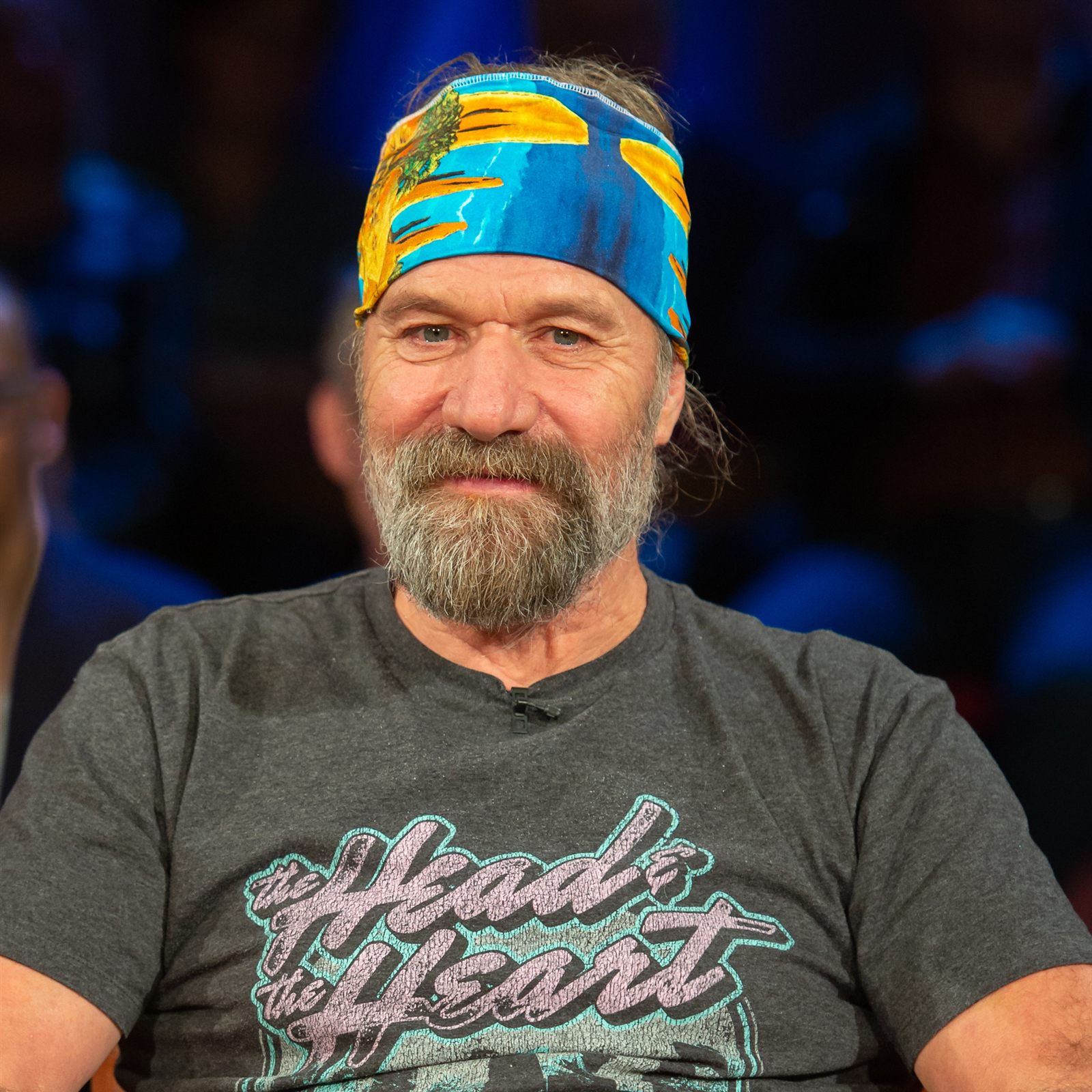
Wim Hof, the Dutch athlete and speaker known publicly as the Iceman, was born on 20 April 1959. Guinness World Records, which keeps a page on him, dates his interest in extreme cold to his teenage years: he would sit out in the snow for hours at a stretch and sleep outside through the winter with neither tent nor sleeping bag, and came to believe he could stay warm in conditions where that should not have been possible. Guinness credits him with 18 record titles. He still holds the mark for the fastest half marathon run barefoot on ice or snow, set in 2007 at 2 hr 16 min 34 sec; he twice took the record for the longest swim under ice on a single breath, with 50 m in 1999 and 57.5 m in 2000, and took the longest-full-body-contact-with-ice title fifteen separate times, peaking in 2013 at 1 hr 53 min 2 sec. Both of those last two records have since passed to other holders.
The same account places the turn in his life after his wife took her own life, leaving him to raise four children alone. He fell into a deep depression, and it was then, Guinness reports, that he began swimming in ice-cold rivers to dull the pain — the start of what became decades of self-experimentation. Around that history he built a teaching system, the Wim Hof Method, run through Innerfire BV, the company he operates with his son Enahm, and taught through courses and a network of instructors he certifies himself.
What a practitioner actually does
The organization describes the method as three linked components, and Hof’s own materials are specific about what each one involves.
The breathing exercise, as wimhofmethod.com sets it out, begins seated or lying down in a relaxed position, in clothing loose enough for the belly to expand freely. The practitioner takes thirty consecutive deep breaths — inhaling fully through the nose or mouth while pushing the belly outward, then letting the breath go out through the mouth without force — and after the final exhalation holds the breath until the urge to breathe returns. One giant recovery breath follows, the belly expanding fully again, held for fifteen seconds and released. That sequence makes up a single round, and the site recommends three to four of them. The pattern is a cyclic one of hyperventilation followed by breath retention, not a single held breath.
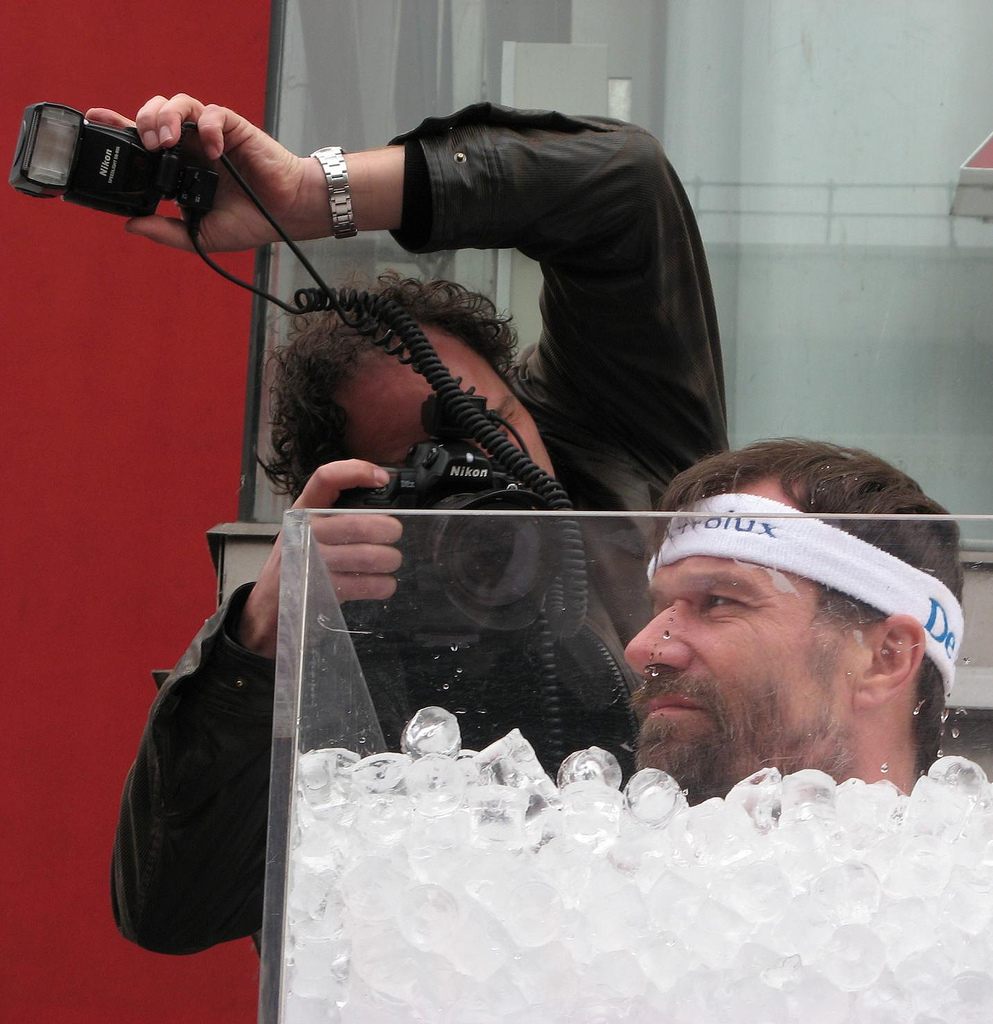
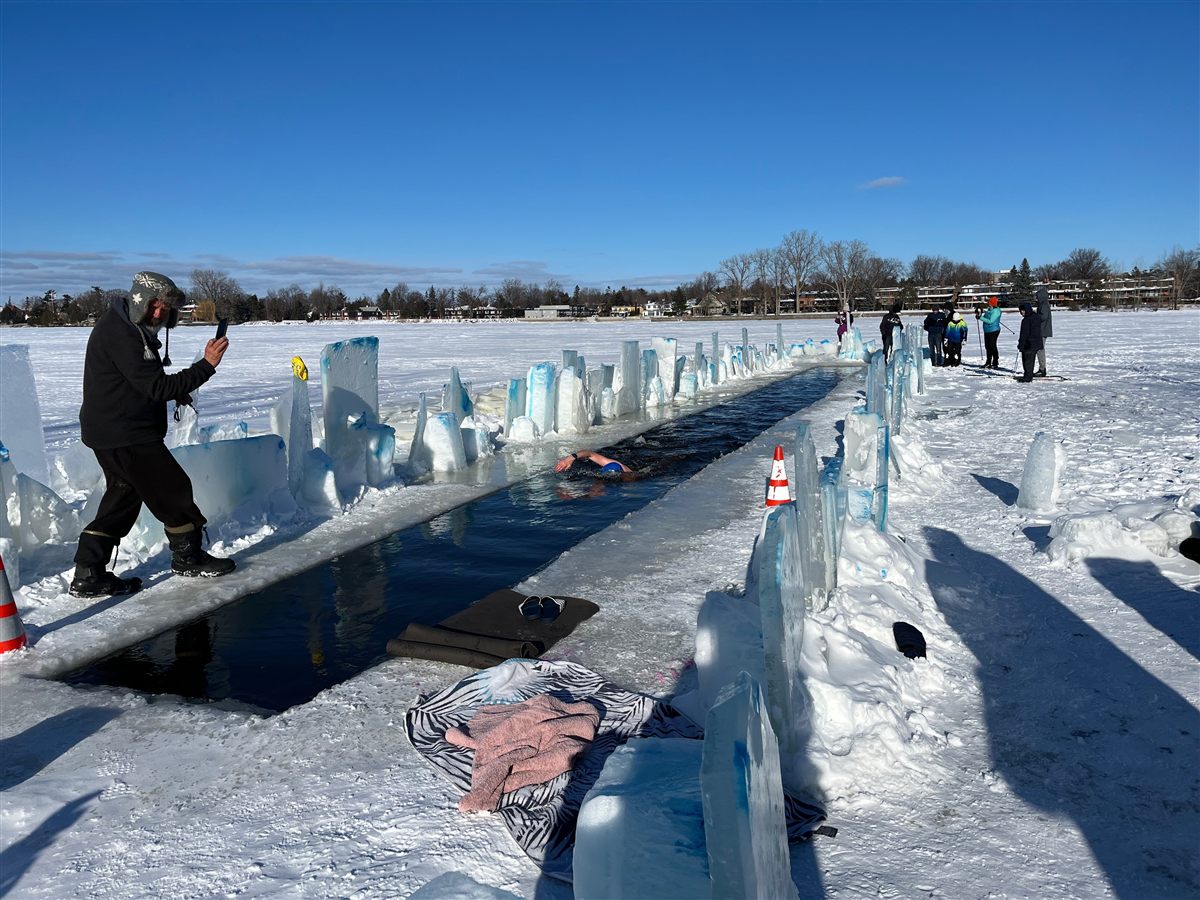
Cold exposure is introduced gradually. The organization’s own guidance starts a newcomer with a thirty-second cold shower at the end of an ordinary one and has them lengthen it from there; its cold-therapy material covers both cold showers and ice baths. The point of the sequencing, as the site puts it, is to let the body adapt under stress rather than to begin with prolonged immersion.
The third component, which the organization calls “mindset” or commitment, is presented as training in attention rather than a separate exercise: staying with a breath-hold, a cold shower or another point of discomfort past the first urge to stop it, and directing attention deliberately during that discomfort instead of letting it wander or panic. The organization frames this as the connective piece — the same attentional discipline used in the breathing and the cold is meant to carry over into how a person responds to stress more generally.
What the method is said to produce
Hof and his organization make broad claims for the combination. Their own science page runs well past inflammation and immune response: reduced depressive symptoms, lower anxiety, stress management, mental clarity, pain perception and chronic pain, improved sleep, energy, lung function and glucose control, and a list of named conditions — multiple sclerosis, psoriasis, axial spondyloarthritis, spinal cord injury, acute mountain sickness. The same page presents a 2025 University of Queensland trial as a head-to-head against mindfulness meditation on stress reduction, energy and mental clarity, from which, it says, the method emerged as the clear favourite. Those are the claims as the organization frames them, in its own language, on its own site — not an independent assessment of what has been established.
The study the rest of the case rests on
The most-cited evidence is a 2014 trial published in the Proceedings of the National Academy of Sciences, led by Matthijs Kox and Peter Pickkers at Radboud University Medical Center. The authors declared no conflict of interest, and the work was funded by a grant from Reumafonds, the Dutch rheumatism foundation; the ten-day training itself, however, was delivered by Hof in person together with three instructors he had previously certified. Thirty healthy, non-smoking Dutch male volunteers were enrolled and randomly allocated, eighteen of them to the training and twelve to no training at all; twelve of the eighteen trained men were then randomly assigned to the endotoxin experiment, alongside all twelve controls. The training covered breathing exercises, cold exposure including ice-water immersion and bare-chested hiking in sub-zero temperatures, and a meditation component. All twenty-four were then given an intravenous injection of bacterial endotoxin, a standard, tightly dosed way of provoking a predictable immune response in a laboratory.
The trained group’s plasma epinephrine climbed well above the untrained group’s once the breathing exercises began, and after the injection their anti-inflammatory response (measured as IL-10) came out 194% higher than in the controls, while the flu-like symptoms researchers use to gauge how unwell endotoxin makes a subject feel peaked 56% lower. The paper’s stated conclusion was that voluntarily activating the sympathetic nervous system releases epinephrine and, through it, suppresses the innate immune response in living human subjects — a notable claim given the authors’ own opening premise, that the autonomic nervous system and the innate immune system are both generally regarded as beyond voluntary control.
The same authors were candid about what the design leaves unresolved. It did not allow them to isolate which element of the training produced the epinephrine rise — they could not rule out that the extreme cold and the rewarming that followed it played a part, possibly through a mechanism resembling ischaemic preconditioning. How long the training needs to be, and how long its effects persist afterwards, they wrote, remained to be determined, and they noted that the result came from an acute inflammatory challenge in healthy volunteers, leaving open whether it extends to patients with chronic autoimmune disease.
What later, independent trials found
Later research, none of it authored by Hof or his organization, has produced a mixed record. A 2024 systematic review of the wider literature by researchers at Warwick Medical School judged it very low in quality overall — small samples, and trials that are almost impossible to blind, since participants obviously know whether they are stepping into an ice bath — and found no adequate evidence behind the claims for stress, anxiety and depression, with the cortisol results mixed and pain among the advertised benefits no study had examined at all. Its own conclusion was that the method “may produce promising immunomodulatory effects,” pending better research.
Two more recent controlled trials reached different conclusions again. A University of Bern team led by Sascha Ketelhut put forty-one healthy young men through fifteen days of either the full method or their normal routine and found neither cardiovascular measures (heart rate variability, blood pressure, arterial stiffness) nor psychological ones separated the two groups — leading the authors to write that the method “should be questioned as a complementary therapy in cardiovascular prevention.” A 2024 randomized trial led by Robin Blades at UCLA and Elissa Epel at UCSF, set the method against slow-paced breathing followed by a warm shower and found the two equally effective against depressive symptoms in midlife women.
A larger 2025 trial from the University of Queensland, by Nadia Fox, Hannah Biddell and Jemma King, followed 404 adults through a 29-day intervention — the trial the organization now cites most. Two arms practised the method, one in person with weekly ice baths in Sydney, the other remotely with cold showers at home. The comparison group sat with a fifteen-minute guided video each day, attending to the natural rhythm of their own breathing and returning attention to it whenever thoughts arose; the authors describe that condition as an active control rather than an optimal mindfulness programme.
On energy and mental clarity the method’s arms did report greater momentary gains than the meditation group, and those gains accumulated across the days of the protocol. The rest of the picture is more divided. On stress the method’s early momentary reductions were the smaller of the two, catching up only as the protocol went on. Measured against the remote arm specifically, meditation produced the greater fall in trait anxiety by day 29 — a difference gone by the one-month follow-up — and those participants also slept significantly longer. On executive-function tasks the method’s arms were faster, the meditation group more accurate. The design assigned participants by location rather than fully at random, and its headline measures were momentary self-reports rather than blood or physiological markers; its funding and competing-interest declarations could not be confirmed from the sources consulted here. It stands as the largest single trial to report an advantage for the method over an active comparison, not as a replication of the 2014 endotoxin result.
The breathing exercise and its risks
The organization’s own instructions carry an explicit warning: performed intensely across multiple rounds, the breathing exercise “can in rare cases lead to loss of consciousness.” The site’s own framing of that risk is worth stating in full, because it draws a distinction the warning depends on — fainting is, in its words, physiologically harmless in itself, and the danger lies entirely in where it happens. Hence the accompanying guidance: practise only seated or lying down, in a neutral indoor space, never in or near water and never at the wheel.
That warning exists because the technique’s mechanism — rapid breathing that lowers blood carbon dioxide, followed by a breath-hold — can suppress the body’s urge to breathe well before oxygen actually runs low, so that a person can lose consciousness with no warning sensation at all. In water, that combination produces what specialists call shallow-water blackout, a documented cause of drowning independent of any inability to swim.
On 10 August 2022, Raphael Metzger found his seventeen-year-old daughter, Madelyn Rose, dead in the shallow pool behind the family house in California. His account is that she had been performing Hof’s breathing exercises, lost consciousness and drowned. He brought a civil claim for damages — 62 million euros — against Wim Hof and his son Enahm, who run Innerfire BV together. Because it was a civil action, no criminal penalty was at stake.
The Hofs’ defence was not a bare denial. They argued that their materials consistently instruct practitioners to do the exercises sitting or lying on the ground and to keep away from anywhere unsafe, water and bicycles included. In July 2024 a Californian court ruled against the claim. The reasoning reaching the press came through Hof’s lawyer, Robert Matsuishi, who told the Dutch daily de Volkskrant that the court had found no indication that Madelyn Metzger performed the breathing exercises in the pool that day, or that those exercises actually caused her to drown. The distinction matters and is easy to lose: the ruling turned on causation not being established, not on any finding that the technique is safe. Her father’s lawyer said he would appeal.
The journalist Scott Carney has separately kept a running tally of deaths and injuries reported in connection with the breathing exercises. His position is an unusual one. He first met Hof in 2013 intending to expose him, became a convert instead, wrote What Doesn’t Kill Us about the experience, promoted the method across hundreds of media appearances, and earned affiliate commissions from Innerfire between 2017 and 2021 — a relationship he now discloses himself as part of turning sharply critical of the organization’s safety messaging. His count, last updated on 1 January 2024, stands at 21 deaths and 18 injuries, twelve of the deaths in the United States, compiled from news reports, police and coroners’ records, and tips from within the Wim Hof community and from drowning-watchdog organizations. It is a journalist’s own compilation rather than an official statistic, and it has not been independently verified here — though the physiological mechanism underlying it, hypocapnia suppressing the urge to breathe, is well established in the wider medical literature on breath-hold diving and hyperventilation.
What the record shows, and what remains the organization’s own claim
The strongest evidence behind the Wim Hof Method sits in one place: a single 2014 trial showing that ten days of combined training let twelve young men blunt a laboratory-induced inflammatory response through a measurable and specific mechanism, authored by a research team declaring no interest in the outcome. Everything built outward from it is less settled — broader claims about mood, chronic disease and general immune benefit rest on a body of trials a systematic review judged very low in quality, and on newer controlled studies pointing in different directions on cardiovascular health, depression, and how the method compares with meditation. The breathing technique’s own combination of hyperventilation and breath-holding carries a specific, mechanistically explained risk that the organization’s own instructions flag, and that has been the subject of a civil damages claim over the drowning of a seventeen-year-old — decided in Hof’s favour on causation, not on the safety of the technique, and under appeal. What a decade of research has produced is a narrow, well-supported physiological finding surrounded by a much larger set of claims still waiting on the kind of evidence that supports it.