
Holotropic Breathwork rests on a simple premise: breathing faster and more deeply than usual, sustained for an extended period and combined with evocative music, can on its own bring on an altered state of consciousness like those associated with psychedelic drugs — without taking any drug at all. It was never meant to be used alongside a drug, but to take the drug’s place entirely. The psychiatrist Stanislav Grof arrived at that combination not by design but by necessity, while searching for a way to give people the kind of experience his earlier research with LSD had produced, after using the drug itself stopped being an option.
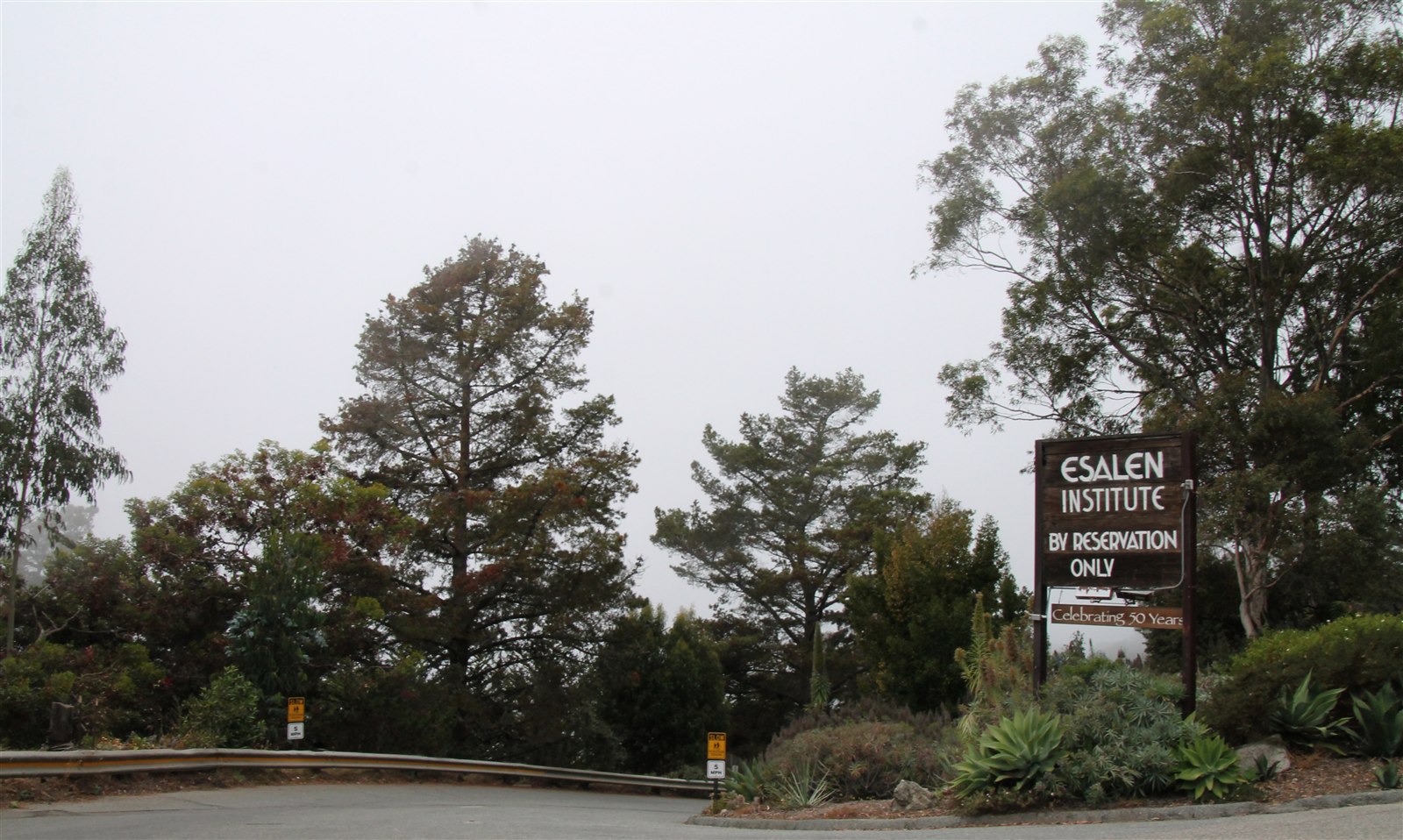
By 1972, Grof was working in what he later called “the last surviving psychedelic research program,” at the Maryland Psychiatric Research Center. He had joined it in 1967, bringing with him the LSD research he had done in Prague, and by now grant money was getting harder to find. He decided to take a year off and write. In 1973 he arrived at the Esalen Institute in Big Sur, California, on an arrangement he remembered fondly: a house on the ocean, room and board, and in return, workshops.
A drug-free way in
The workshops created a problem. Grof talked about his psychedelic research and illustrated it with paintings made in LSD, psilocybin and mescaline sessions, and his audiences found it frustrating to only listen. Their refrain, as he recalled it, was whether he didn’t have “a little stash on the side.” Psychedelics were illegal, and Esalen’s staff would have been very upset by any breach of the rule. As the complaints continued, Grof began looking for another way to give people the experience.
He found it in something he had seen at the tail end of LSD sessions. When a patient came down from the drug feeling that the session was unfinished, Grof had sometimes worked directly on the body at the patient’s request. One man, angry and in pain, asked him to press hard on his shoulder; after some twenty minutes of shaking, screaming and coughing, he relaxed completely. Grof made this kind of work routine, and noticed that in several patients it set off fast, spontaneous breathing. They told him the breathing carried them back into the session, even though the drug had already worn off. Faster breathing, Grof concluded, could bring unconscious material to the surface by itself.
At Esalen he and Christina Grof began experimenting with groups. Participants lay on their backs, breathed and listened to music, which had also been part of the psychedelic sessions in Prague and Baltimore. When someone went deep into what they called “the process,” the two of them worked with that person directly, using the same kind of bodywork.
An accident in the garden
That group format — lying down, breathing, listening to music — was already in use at Esalen when the accident came. What the accident changed was not the breathing itself, but who looked after the person breathing: until then, that had mainly been the Grofs’ own job.
By Grof’s telling, the garden intervened. At their house on Buck Creek, near Esalen, he was turning a patch of poison oak into terraces for a vegetable garden when he lifted a beam and threw out his back so badly that he could barely move. A workshop of 46 people was due the following weekend, and it had been promised breathing sessions with bodywork (where the group came from shifts between Grof’s own retellings: in one, Australia; in another, Canada, Europe, Latin America, Australia and Japan). It was impossible to cancel, and Grof could not do the work himself. After long deliberation, he and Christina paired the participants up as “breathers” and “sitters,” explained the process, and supervised.
Most of the group had what Grof called “pretty significant experiences,” but what surprised him was the other half of each pair. The sitters said that simply being present for someone else’s process had felt like a privilege, and the breathers valued having another person’s undivided attention. The session went so well, Grof said, that they never ran it any other way again. He dates the method itself to 1975, at Esalen: a breathing method of self-exploration and psychotherapy, which he named holotropic breathwork because it was based on what he considered the healing effect of the holotropic state of consciousness.
What a session looks like
A Holotropic Breathwork session is built around the pair that came out of that workshop: a “breather” and a “sitter,” who alternate roles so that each person does both. The breather lies on a mat with eyes closed and, after a short relaxation, begins to breathe faster and more deeply than usual, keeping that pace up while evocative music plays in the room. A breathing session runs about three hours. The music, too, came out of the psychedelic years, when a music therapist sat down with patients to ask about their tastes. The idea, Grof recalled, was music that supported wherever a person was: drumming and intense music for someone plainly angry, “timeless, floating, meditative” ragas for someone coming to closure.
The sitter’s job is deliberately passive: to be present and available to the breather, but not to interfere, interrupt or try to guide what is happening. The trained facilitators in the room take the same stance, and are there as helpers if they are needed. When the breathing ends, focused bodywork can help release tension that remains in the body. Integration follows: most often the painting of a mandala, a first attempt to put the experience into words, and a structured sharing with the group. The name reflects the framing: “holotropic” combines the Greek holos, whole, with trepein, moving in the direction of something — moving toward wholeness.
What the tradition says the states contain
Grof’s own map of the psyche holds that experiences in these states reach beyond a person’s life story from birth to the present, which he calls the biographical dimension. They extend, in his framework, into the perinatal, which includes reliving one’s own birth, from conception through the womb and the birth canal, and into the transpersonal, which includes the archetypes described by Jungian psychology and collective experiences described by the world’s spiritual traditions. This is the tradition’s own account of what the states contain, as set out in its own materials. What is documented beyond it is the practice itself and its lineage: a specific technique, built by a named person for a specific reason.
Who the practice says shouldn’t do it
Organizations that teach Holotropic Breathwork screen participants before a session rather than opening it to anyone. Holotropic Breathwork Basel, which offers the technique, clears contraindications in a personal conversation in advance, and lists pregnancy, heart and circulatory problems, high blood pressure, epilepsy, glaucoma, osteoporosis and acute mental illness among the conditions that rule out taking part. The practice’s own training organization is blunt about why. Fast breathing can open up deep emotional material, it says, and where the training, screening, preparation and integration are missing, it warns of “panic, retraumatization, or even serious psychological consequences.” Leaving those steps out, it adds, is a common failing among groups that offer the practice without having completed the training.
Grof stayed at Esalen for fourteen years, as faculty-in-residence. The practice outlasted his time there. Holotropic Breathwork is still taught today by practitioners certified through Grof Transpersonal Training, and in 2020 Grof and his wife launched a further training under which it is taught as GROF® Breathwork. Both trainings rest on the same structure that began, by his own telling, as a way of working around a bad back.