The instruction, as it has been handed down, is unadorned: find a place where no one can hear, and talk. Not the fixed Hebrew wording of the daily liturgy, not a psalm recited from memory, but ordinary speech, in whatever language comes most naturally, addressed directly to God as one might address a close friend. There is no script. A practitioner might spend the time working through a grievance, admitting a fault, asking for something specific, or simply describing the day that has just passed. The only real requirement is that the words be the practitioner’s own, spoken rather than merely thought, and that the practice be returned to daily.
This is hitbodedut — from a Hebrew root meaning seclusion — and it was taught as a central, even the central, spiritual discipline by Rebbe Nachman of Breslov, a Hasidic master who lived in what is now Ukraine at the turn of the nineteenth century. Two centuries later it remains a living practice among Bratslav Hasidim and among other Jews outside that community. Rebbe Nachman’s teachings on it are published and explained today by the Breslov Research Institute, a publishing house founded in 1979 whose translations have carried them into English, Hebrew, Russian, Spanish, French and Korean.
Speaking as if to a friend
Aryeh Kaplan’s 1985 book Jewish Meditation: A Practical Guide gives the practice a chapter of its own. Of all the Hasidic masters, Kaplan writes, none spoke of hitbodedut more often than Rebbe Nachman, and his main technique consisted of conversations with God — spoken aloud, in a person’s own native language, rather than in the predetermined wording of the liturgy. The word itself, Kaplan notes, literally means self-isolation, and had been in use for meditative practice in Hebrew as early as the tenth century.
Breslov’s own teaching materials, drawing on Rebbe Nachman’s recorded teachings, describe the manner this way: a person should speak in a simple, straightforward way, “as if he were conversing with a close friend,” setting out troubles and complaints as openly as one would to someone trusted completely — and, in another image Rebbe Nachman used, “like a child pleading before his father.” The same materials attach a caution to the analogy: what is meant is the candour of such a conversation, not familiarity toward God. The content is whatever is actually on the practitioner’s mind: gratitude, confusion, a specific request, an admission of wrongdoing. And a bare exclamation counts: when all a person can say is “Master of the World!”, Breslov’s guidance holds, that too is good.
The practice sits alongside, not in place of, the three daily services — shacharit in the morning, minchah in the afternoon, maariv in the evening — that structure traditional Jewish worship, each following a predetermined wording. Kaplan is explicit that personal prayer was never meant to downgrade that formal system, which he calls of paramount importance in Judaism. Nor was spontaneous prayer itself an innovation: Kaplan describes an unbroken tradition of it within Judaism, and notes that Jews in Europe commonly cried out to God in their native Yiddish. What Rebbe Nachman did was give it a central role. Kaplan draws the line between the two modes carefully — spoken to God whenever a person feels impelled to, it is prayer; made a fixed practice at a definite time each day, it becomes meditation.
An hour a day, and somewhere no one will interrupt
Kaplan sets out the commitment in plain terms: a fixed amount of time each day given over to speaking to God, the amount Rebbe Nachman prescribed being approximately an hour every evening, practised every day without fail.
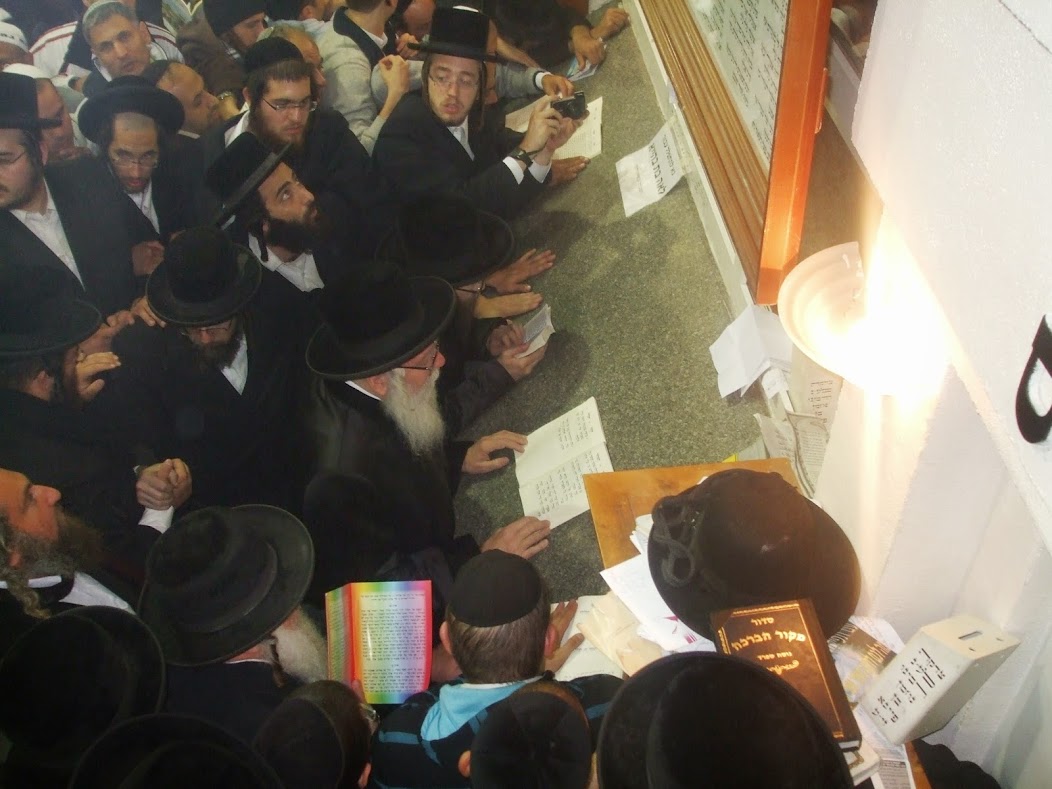
On place, Kaplan is relaxed. The place is not important, he writes, as long as it is somewhere one will not be interrupted. He records that Rebbe Nachman thought a special room set aside for meditation best where that was possible, that woods, hills and fields were good places, especially in comfortable weather, and that lying under the covers in bed at night was a viable alternative. Breslov’s own present-day guidance ranks the options more firmly in Rebbe Nachman’s name — a private room is good, a park better, out in the fields or forests better still — on the principle that the quieter and more secluded the place, the more suited it is. Where none of that is available, the same guidance offers improvised privacy: draping a talit, the fringed shawl worn at prayer, over one’s head and conversing beneath it even in a room full of people; lying in bed under the covers; sitting in front of an open book so that onlookers assume one is studying; or simply walking.
Night carried a similar logic. Breslov’s guidance describes the ideal time as “at night, when the world around you is asleep,” and the middle of the night as better still, on the reasoning that the appetites and pursuits that occupy people by day are then at rest. Consistency mattered more than any single session: hitbodedut practised every day was held to be worth many times over hitbodedut that is interrupted.
The first twenty minutes
Rebbe Nachman’s advice for the hardest part, the beginning, was to sit down in the place where one meditates and say that for the next twenty minutes one will be alone with God. Even if nothing is said, the time still counts; sit long enough, he held, and something to say will come.
Breslov’s own guidance is candid about why that reassurance is needed. A person can read every lesson on hitbodedut, learn the hours and the settings and the manner, and still find, on finally sitting down to do it, that the mind goes blank and the words dry up — an experience the guidance describes as common, and not confined to beginners. Nothing has gone wrong at that point. Rebbe Nachman is recorded as holding that sitting there unable to say anything is itself of value, and that a person who can manage only “Master of the World!”, and then manage it again, is practising rather than failing. That is the floor the hour rests on: the silence counts, and nothing has to be produced to fill it.
What tends to follow, in the analogy the whole practice is built on, is what follows in a real conversation with a close friend. One thing said leads to another, and someone who began with nothing to say ends up disclosing what is furthest in. The words move because nothing needs guarding in front of that listener. Speaking in ordinary everyday language rather than a liturgical one belongs to the same mechanism: everyday words track what a person actually feels more exactly, which is why they arrive without being searched for.
The specimen conversation Breslov’s guidance offers is deliberately unremarkable. A man tells a friend about his day — he woke in good spirits and prayed with energy at the synagogue, then caught sight of someone he had quarrelled with the week before and felt the whole thing drain out of him; he took the mood home into a fight with his wife, had a wretched day at work, and suspects he is about to be fired. He ends where such accounts end, by asking what he is supposed to do. The instruction is then simply to deliver the same speech, with the same frankness and the same detail, to God instead of to the friend.
So the hour has no stages to work through. What it has is a shape: a stretch of silence that counts as practice, a first sentence that may be no more than an exclamation, and then, when it comes, ordinary speech finding its own order — a grievance, a piece of gratitude, a specific request, an admission — for as long as the hour lasts.
A rebbe who made personal prayer central
Rebbe Nachman of Breslov was born in 1772 in Medzhybizh, in what is now Ukraine, a great-grandson of the Baal Shem Tov, the founder of the Hasidic movement. The Baal Shem had taught that every individual could attain a strong personal relationship with God; Rebbe Nachman, in Kaplan’s account, expanded that idea, teaching that the most powerful method of attaining such a relationship was personal prayer in one’s own native language — a claim about where the strongest connection lay, and one that required no scholarly training and no fixed text. The Breslov Research Institute makes a related point about his teaching as a whole: that he turned the esoteric material of Kabbalah into concrete, practical advice anyone could use.
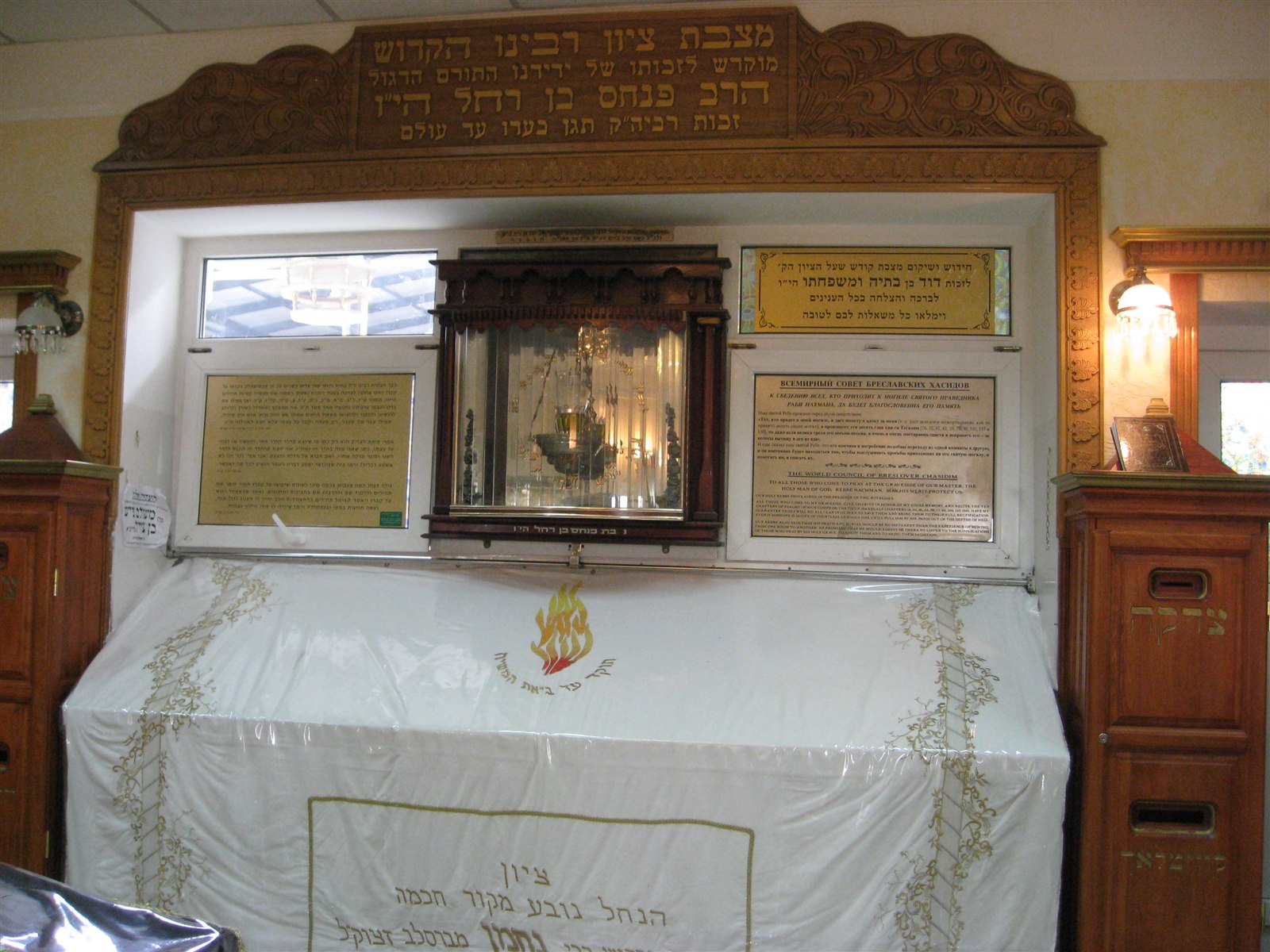
He died in 1810, at thirty-eight, of tuberculosis — a disease he contracted in the late summer of 1807 and lived with for three years — and was buried in Uman, a town he had earlier called “a good place to be buried.” Because none of his sons survived to adulthood and he appointed no successor, Bratslav Hasidism is the only Hasidic movement without a living rebbe; its adherents look to Rebbe Nachman’s own recorded teachings rather than to an inherited line of leadership.
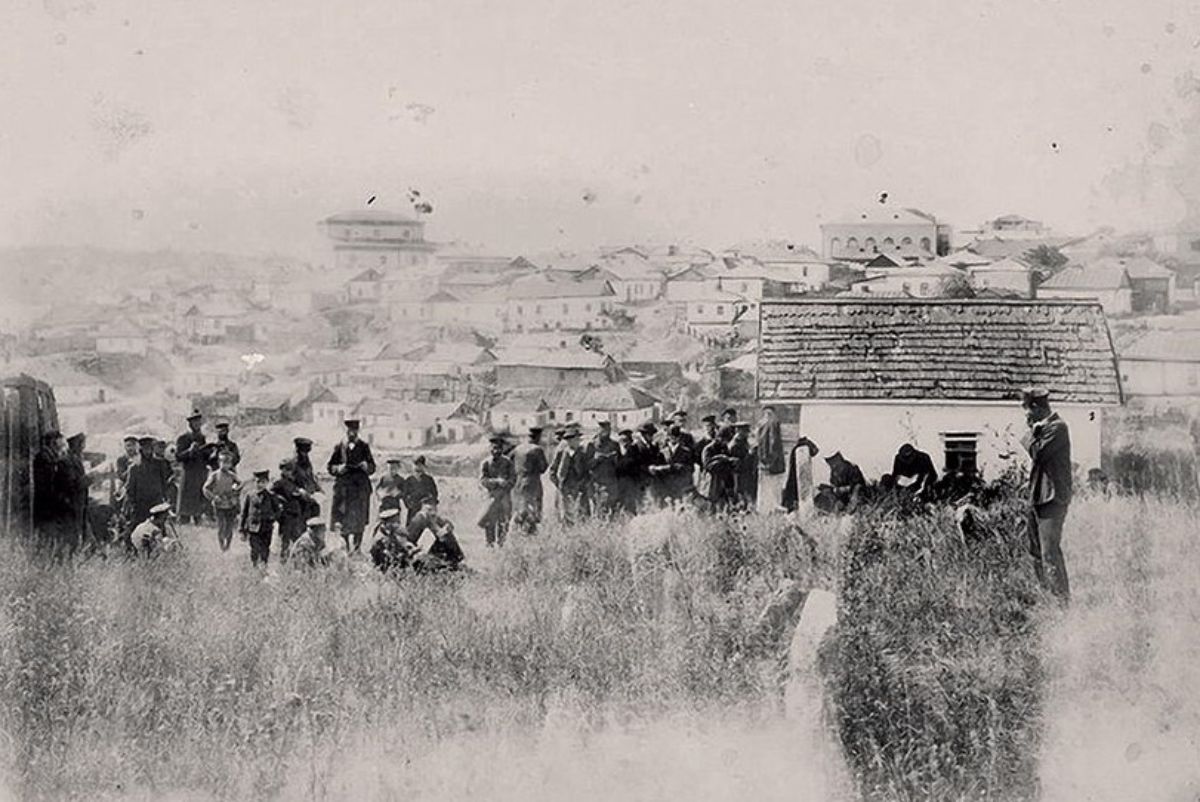
Much of what survives of those teachings, hitbodedut included, exists because of Reb Noson Sternhartz, who became Rebbe Nachman’s student in 1802 and recorded his master’s lessons, conversations and stories over the eight years that followed. Rebbe Nachman later asked him to do exactly that, and, in the Breslov Research Institute’s account, said of him that “without him, not one page of my teachings would have remained.” When Rebbe Nachman died, Reb Noson was qualified to succeed him and chose not to, remaining the movement’s de facto leader and publishing his master’s works instead. It was Reb Noson, too, who established the annual Rosh Hashanah gathering at the grave in Uman, in 1811 — a gathering that today draws more than twenty thousand Bratslav Hasidim and other Jews each year.
What the movement teaches now
Kaplan’s book and the Breslov Research Institute’s current materials describe the same practice, and part only on emphasis. The Institute ranks the hours and the settings firmly, then releases the reader from its own ranking where life makes it impossible: although night is the best time, its guidance says, “every time is a good time,” and a talit or an open book will serve where a field cannot. Kaplan, writing in 1985 for a general readership, treats the setting as largely immaterial and makes his concession on duration instead, noting that many people find twenty to thirty minutes a more comfortable period and that what matters is the fixed time and the daily repetition. Both trace to the same teacher and the same body of recorded teaching; each is pitched at the readers it was written for.
A practice that continues
Hitbodedut is prayer in the plain sense — a Jew addressing God directly — and neither source presents it as a relaxation exercise. Kaplan, who does compare it to therapy, spends several pages on the difference: psychotherapy deals with the mundane dimensions of a person and prayer-meditation primarily with the spiritual, and where the therapist supplies an answer from outside, here it comes from within. He carries the comparison as far as its warning, too. Used as self-therapy it can uncover unresolved problems with no therapist in the room, and he advises anyone who finds it going that way to work with an experienced guide. The element of self-examination is built into the vocabulary: Kaplan notes that the Hebrew verb for praying, hitpalel, is the reflexive form of a root meaning to judge — to judge oneself. Bratslav Hasidim continue to practise it as a daily discipline, with the largest community in the Mea Shearim neighbourhood of Jerusalem and others in the United States, and the Breslov Research Institute continues to publish Rebbe Nachman’s teachings on it for a wider readership.