A meditator sits with eyes closed, attention resting on the abdomen. As the belly rises with each in-breath, a single silent word passes through the mind: “rising.” As it falls: “falling.” When a sound intrudes, it is noted — “hearing, hearing” — and attention returns to the abdomen. When a leg begins to ache, that too is noted, “painful, painful,” without trying to make it stop. When the mind drifts off into a plan, the drifting itself becomes the object: “wandering, wandering,” until the mind lets go of the story and comes back to the body. Each label lasts only as long as it takes to note it, and then it is dropped.
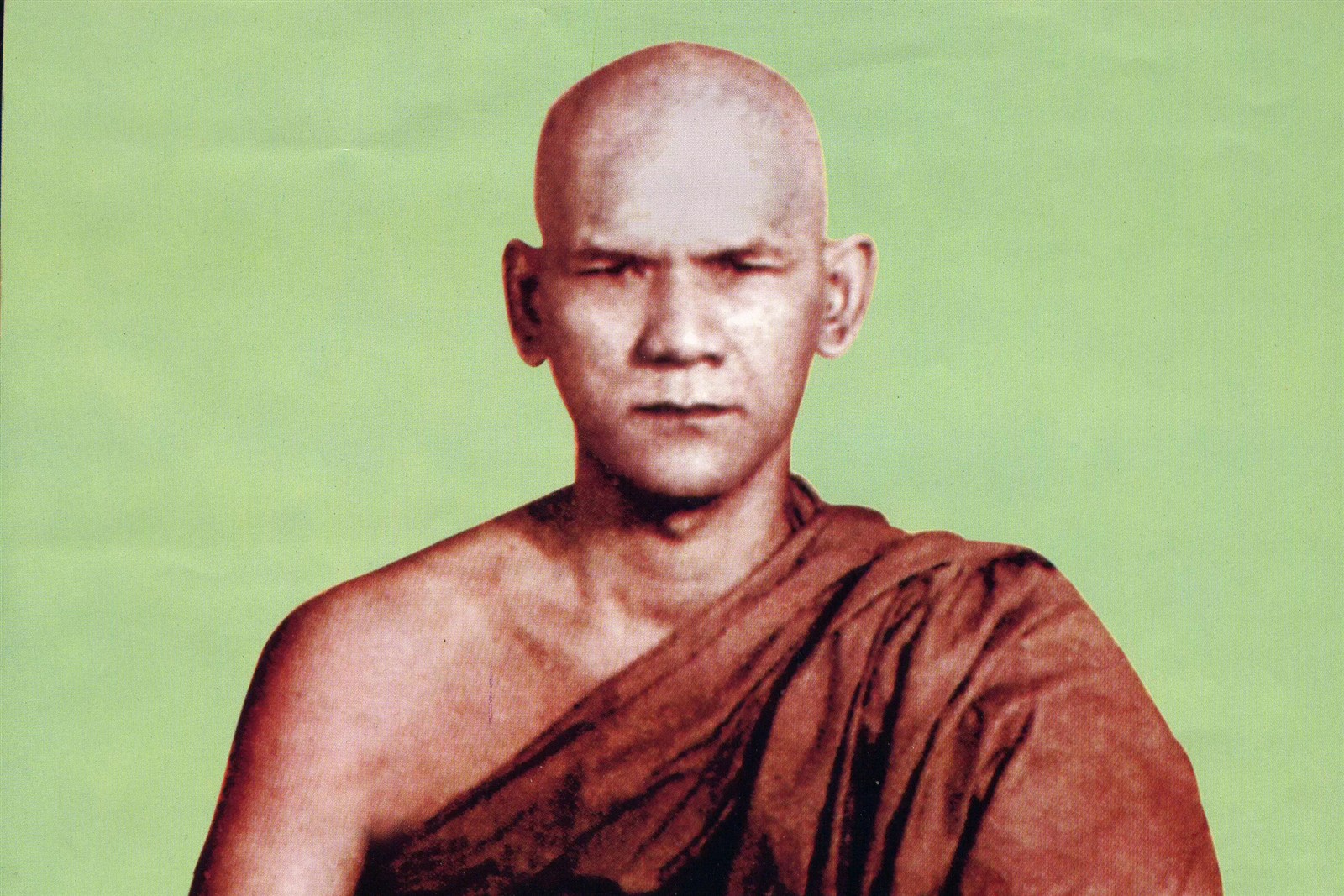
This is “noting,” the technique at the heart of a system of insight meditation taught in Burma by the monk Mahasi Sayadaw (1904–1982). From a single meditation centre in Rangoon, opened in 1949, it grew to more than a hundred branch centres across the country, and in 1979 Mahasi Sayadaw travelled as far as Massachusetts to hold a teaching-authorization ceremony with the founders of a young American retreat centre.
The technique: naming what is already happening
Mahasi Sayadaw’s method, as he set it out in his own instructions, anchors a beginner’s attention to the movement of the abdomen. “With every breath there occurs in the abdomen a rising-falling movement,” he wrote, and that movement is “easy to observe because it is coarse.” The breath itself is left alone: it is not held back to slow it, nor hurried, nor deepened. The meditator simply follows the movement, making a silent mental note of “rising” as the abdomen goes up and “falling” as it goes down.
The abdomen is a base to return to, not the only permitted object. Whatever else becomes the most prominent thing in awareness — a sound, an itch, a thought, an emotion — is noted in its turn, in a single word matched to the experience: “thinking” at the moment of thinking, “planning,” “hot,” “stiff,” “happy,” “disgusted.” The word itself is not the point. It is “more important to know the object,” he wrote, than to know what to call it. A wandering mind gets the same treatment rather than being scolded or suppressed — “it should be noted as ‘wandering, wandering, wandering’” — and once or twice, by his account, is usually enough for the wandering to stop and the noting of rising and falling to resume.
The same principle carries into walking. Walking briskly, each step is noted as “right step, left step,” or simply “walking, walking.” Walking slowly, a single step is broken into parts — “lifting” and “placing,” or, divided further, “lifting, moving forward, placing down” — with a note made at each stage, and attention stays on the sole of the foot from the moment it leaves the ground to the moment it comes down. The instruction is the same whether the object is the belly, a sound, a thought, or a footstep: name it as it is actually occurring, then let it go.
The instructions set a demanding pace. Noting begins at the moment of waking, and intense contemplation through every waking hour is described as the routine of a yogi who is working in earnest. Four hours of sleep is called ample. The text even anticipates the body wearing down under the effort — quoting the scriptures’ image of a practitioner reduced to “skin, bones and sinews” — and insists that the effort still not be given up. At his centre this was taught as an intensive course of training, not as a brief daily habit.
From scholar-monk to meditation teacher
Mahasi Sayadaw was born near the town of Shwebo, in Burma, in 1904. He was ordained a novice monk at twelve and took full ordination at twenty, and he made his name first as a scholar: by his fifth year as a monk he was himself teaching the scriptures at a monastery in Moulmein. In his eighth year as a monk he left Moulmein in search of a meditation method that was clear and that worked. At Thaton he placed himself under the monk U Narada, known as the Mingun Jetawun Sayadaw, a well-known meditation teacher, and went through intensive training with him.
In 1941 he went back to his native village and began teaching the practice there systematically. Monks and laypeople alike took it up.
Fifteen devotees on Hermitage Road
The opportunity came in 1949. At the personal request of U Nu, Burma’s prime minister, and of the president of the Buddha Sasananuggaha Association, Mahasi Sayadaw came down from Shwebo to Rangoon, arriving on 10 November of that year. The meditation centre at the Thathana Yeiktha, on Hermitage Road in Rangoon, opened formally on 4 December 1949. Fifteen devotees made up the first group he trained there in what the introduction to his published discourse calls “the right system of Satipatthana Vipassana.”
The routine soon told on its teacher. From the first day, each new batch of arrivals was given a discourse on the practice — its purpose, its method, its benefits — and new batches arrived almost every day. The talk usually ran an hour and a half. Giving it that often, the introduction records, “inevitably caused a strain.” The Buddha Sasananuggaha Association’s solution was practical rather than doctrinal: it offered to donate a tape recorder. On 27 July 1951, the talk was recorded once, as it was given to a group of fifteen devotees, and from then on new arrivals heard the tape, preceded by a few remarks from Mahasi Sayadaw in person, rather than a fresh talk each day.
The centre did not stay a single site. A biographical note accompanying his published teachings records that more than a hundred branch centres of the Thathana Yeiktha were established in Burma, and that thousands of people trained at his centre under his guidance. He went on teaching intensive courses there until his death in 1982. Many more, the note adds, learned from his writings and from the teachers he trained.
Reaching the West
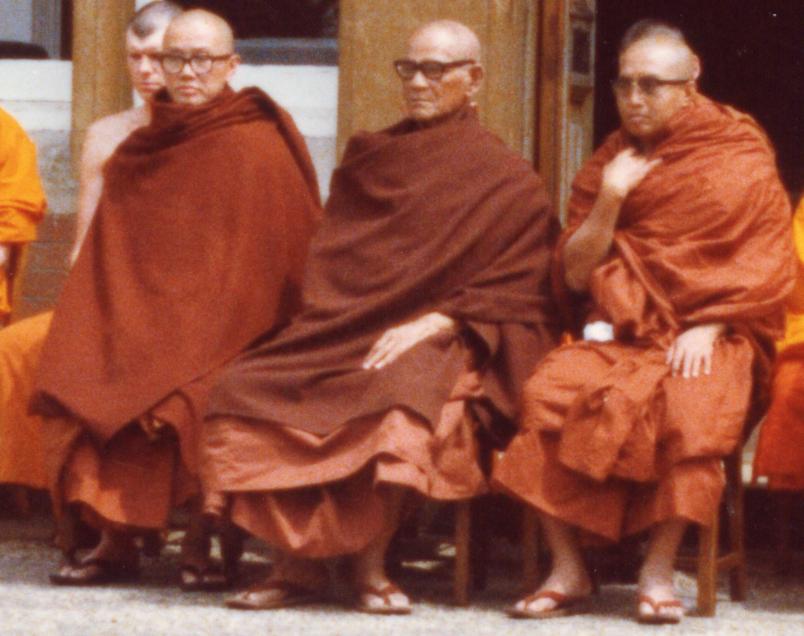
The same biographical note says the method spread widely beyond Burma, “East and West.” In 1979 Mahasi Sayadaw travelled himself to Barre, Massachusetts, and the Insight Meditation Society, which Joseph Goldstein, Sharon Salzberg and Jack Kornfield had opened there in February 1976. The Society’s own archive records that he held a teaching-authorization ceremony with its founders, and that Goldstein showed him and his monks around the grounds.
Vipassana in the form Mahasi Sayadaw taught it was not the only Burmese method to travel west in the twentieth century. A separate line, taught by the senior government official Sayagyi U Ba Khin and carried to India, and from there around the world, by his student S.N. Goenka, built its own network of ten-day residential courses around a different instruction: observing physical sensations throughout the body and learning not to react to them. The two share a country of origin and the name vipassana, but they ask the meditator to do different things with attention. That is a difference of method, not a sign that either is the more authentic version of the other.
The talk on that 1951 tape did not stay inside the centre’s hall. Demand from the branch centres and the public saw it published as a book in 1954, and it was later translated into English for readers who did not know Burmese. That translation is the source of the instructions quoted earlier in this piece: the ninety-minute talk a donated tape recorder spared its author from giving every day.