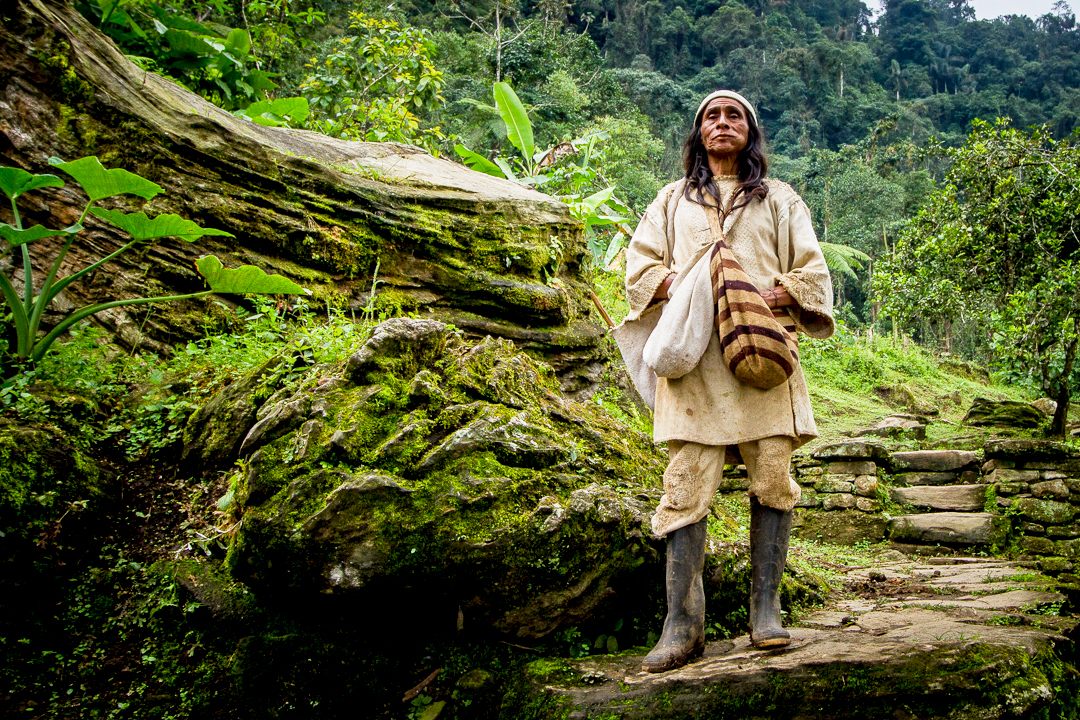
Partway through a Kogi priest’s training — a period Reichel-Dolmatoff says was ideally eighteen years long, divided into two nine-year cycles — the exercises changed. In the second cycle, the youth who had learned simple yes-or-no divination was introduced to a harder stage: a discipline of relaxed muscles, a regulated breath, and a trained form of “listening” turned inward rather than at any external cue. Reichel-Dolmatoff described the sequence in an essay based on research conducted decades before its 1976 publication.
A ladder of divinatory exercises
Reichel-Dolmatoff’s account states only that training moved, in this second cycle, from simple yes-or-no divination to the harder discipline described above. He doesn’t say why the sequence was ordered this way, and this piece doesn’t guess. What came before it was itself unusual: “because the mámas were educated in darkness, they have the gift of visions,” he writes, describing years spent largely in enclosed, lightless rooms, taught at night by a voice from elsewhere in the house.
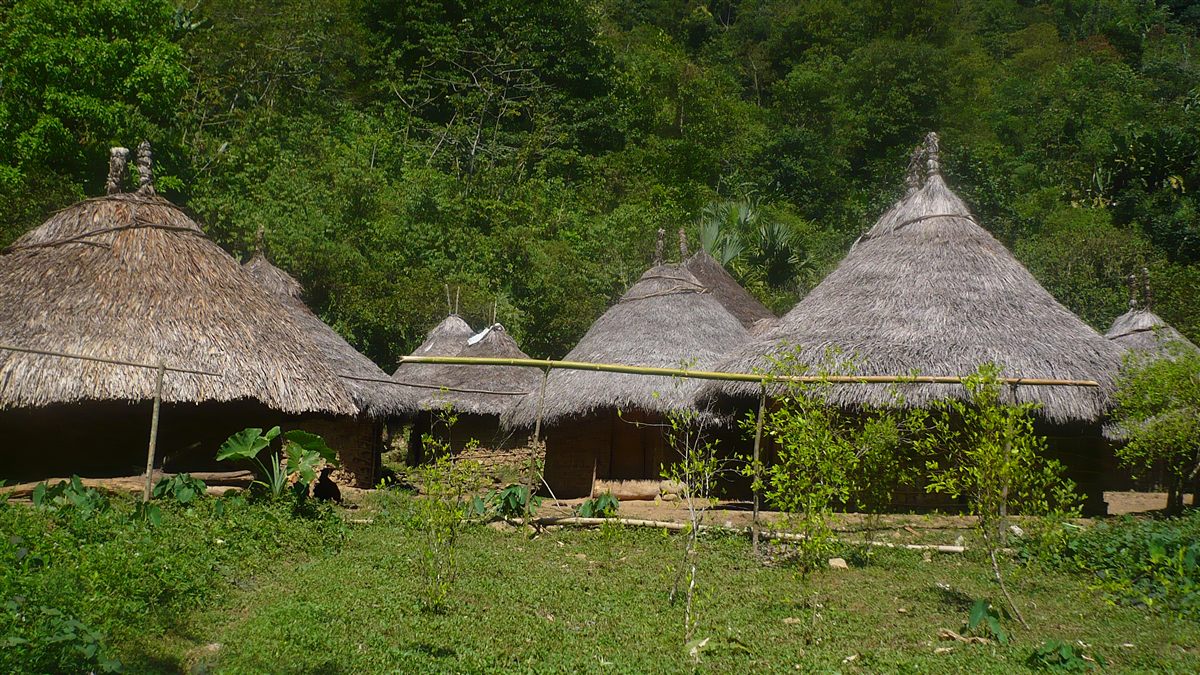
Where the visions came from
Reichel-Dolmatoff traces the resulting altered states to more than one cause. Hallucinatory states in general, he notes, “can… be produced endogenously by sensory privations and other practices” — among them, in the mámas’ own account to him, that “a controlled set or sequence of sensory privations eventually produces altered states of consciousness.” The Kogi also used a hallucinogenic mushroom, Meteniusa edulis, reserved for mámas, to induce visionary states directly. Trance during actual ritual officiating, he adds, was more likely produced by yet another combination — ingested drugs together with strenuous physical exertion. The account doesn’t reduce these to one mechanism; it describes several routes the Kogi themselves distinguished, used at different stages and for different ends.
Instructions received, decisions made alone
Once in an altered state reached through this discipline, a máma was understood to receive instructions — about offerings to be made, ceremonies to be organized, and sickness to be cured, in Reichel-Dolmatoff’s account — arrived at through what remained a solitary act of attention. That solitude was specific to decisions rather than a blanket rule: a máma “may discuss occasionally some difficult matter with others,” Reichel-Dolmatoff writes, “but to arrive at a decision, he must be quite alone.” A máma’s “true self can find expression only in the solitary meditation he practices,” and a novice being trained toward that capacity might be “sent alone, at night, to accomplish a dangerous task” — a test of nerve as much as of technique.
Training in this discipline began early — Reichel-Dolmatoff puts the start at roughly two or three years old, rarely past the child’s fifth year — and the eighteen-year formation it belonged to concluded, by his account, with a different kind of test: a novice in trance made to “escape” a sealed ceremonial house. The breathing-relaxation-listening sequence was one stage inside that much longer institution — a specific thing a youth was taught to do with muscle, breath, and attention, not to another person, but to whatever a controlled, quieted body might make audible from within.